Category: Uncategorised

  • We’re Teaching Apprentices a Trade. But Are We Teaching Them to Thrive

    We’re Teaching Apprentices a Trade. But Are We Teaching Them to Thrive

    We’re Teaching Apprentices a Trade. But Are We Teaching Them to Thrive? 

    Every year, colleges, training providers and employers invest significant time and resources in helping apprentices develop the technical skills needed for successful careers. Qualifications are achieved, competencies are assessed and standards are met. 

    But there is another skills gap that often receives far less attention. 

    Many apprentices begin work without the confidence or knowledge to manage their first wage, understand workplace expectations, build relationships with colleagues from different generations or prepare for the increasingly diverse ways people now work. These are not technical skills, but they can have just as much impact on whether an apprentice succeeds. 

    The reality behind the first pay packet 

    For many apprentices, receiving their first wage is a major milestone. It is also the first time they have had to budget for travel, food, rent, bills and other everyday expenses. 

    Despite this, financial education remains inconsistent, leaving many young people to learn through trial and error. Understanding payslips, tax, pensions, budgeting and saving are essential life skills, yet many apprentices start work with little confidence in any of these areas. 

    When financial worries begin to affect concentration, confidence and attendance, they quickly become workplace challenges as well. 

    Workplaces are changing 

    Today’s apprentices are joining teams that often span four generations. Different communication styles, expectations and ways of working can sometimes create misunderstandings, even when everyone is working towards the same goal. 

    Rather than focusing on stereotypes, organisations should help apprentices understand how to communicate effectively, ask for support, receive feedback confidently and build positive working relationships. Likewise, experienced colleagues can benefit from understanding the perspectives and strengths younger employees bring into the workplace. 

    These skills don’t just improve workplace culture; they improve retention and confidence too. 

    Preparing for the future of work 

    Increasingly, careers are no longer linear. Many young people will move between employment, contract work and self-employment during their working lives. 

    Yet few apprentices receive practical guidance on what self-employment actually involves. Understanding tax, National Insurance, invoicing, expenses, record keeping and the impact on benefits such as Universal Credit can make the difference between a successful transition and an expensive mistake. 

    Preparing apprentices for modern careers means preparing them for these realities, not simply the job they are doing today. 

    More than technical training 

    Technical competence will always remain at the heart of apprenticeships. But confidence, communication, financial wellbeing and workplace resilience are becoming just as important. 

    By equipping apprentices with these wider life and employability skills, education providers and employers can help improve wellbeing, reduce avoidable challenges and support apprentices to build long-term, sustainable careers. 

    After all, success at work isn’t just about knowing how to do the job. It’s about having the confidence and life skills to thrive once you’re there. 

    Our Apprentice Workshop Series 

    To help apprentices develop the wider skills needed to succeed in today’s workplace, Society Matters has created a suite of three interactive workshops. Each session can be delivered as a standalone workshop or combined into a bespoke development programme. 

    Workshop 1: Financial Wellbeing for Apprentices 

    Starting work and receiving a first wage can be exciting, but it also brings new responsibilities. This practical workshop gives apprentices the confidence to manage their money effectively and make informed financial decisions from the start of their careers. 

    Topics include: 

    • Understanding payslips, tax, National Insurance and pensions. 
    • Budgeting and managing monthly income. 
    • Saving, building good financial habits and avoiding debt. 
    • Understanding workplace benefits and employee support. 
    • Planning for future financial goals. 
    • Where to access help and advice if money becomes a concern. 

    Ideal for: New starters, first-year apprentices and anyone looking to improve their financial confidence. 

    Workshop 2: Preparing for Self-Employment and the Modern World of Work 

    Many apprentices will go on to work as contractors, freelancers or self-employed professionals during their careers. This workshop introduces apprentices to the practical realities of self-employment and helps them understand the options available in today’s evolving labour market. 

    Topics include: 

    • Employment, self-employment and subcontracting explained. 
    • Sole trader, partnership and limited company basics. 
    • Registering with HMRC and understanding tax responsibilities. 
    • Record keeping, invoices and allowable business expenses. 
    • Universal Credit, the Minimum Income Floor and financial considerations. 
    • Business planning, budgeting and sources of support. 

    Ideal for: Apprentices entering sectors where self-employment or contracting is common, or anyone interested in future business opportunities. 

    Workshop 3: Workplace Success – Building Confidence Across Generations 

    Technical ability is only one part of workplace success. This highly interactive workshop helps apprentices build the confidence, communication skills and resilience needed to thrive in diverse workplaces and develop positive relationships with colleagues of all ages and experience levels. 

    Topics include: 

    • Understanding different communication styles. 
    • Bridging generational differences in the workplace. 
    • Asking for support with confidence. 
    • Giving and receiving constructive feedback. 
    • Managing workplace misunderstandings professionally. 
    • Building resilience, confidence and a positive professional reputation. 

    Ideal for: Apprentices at any stage of their programme who want to strengthen their workplace confidence and interpersonal skills. 

    Flexible Delivery 

    All workshops are available online or in person and can be tailored to your organisation, apprenticeship standard or sector. Sessions are interactive, practical and include real-life scenarios, group activities and take-away resources that apprentices can apply immediately in the workplace. 

    For more information visit https://societymatterscic.com/new-apprentices-development-workshops/  

    Would you like to set up a meeting to discuss these workshops further? Email us at hello@societymatterscic.com


  • Development Workshops for New Apprentices

    Development Workshops for New Apprentices

    Take Control of Your Money: Financial Wellbeing Made Simple for Apprentices

    This engaging and interactive half-day workshop is designed to help apprentices build confidence around money, spending, budgeting and future financial planning. Covering everything from understanding payslips and managing debt to everyday savings, advertising tricks and planning for the future, the session provides practical tools that can make a real difference to financial wellbeing. 

    Using real-life examples, discussions and activities, learners will explore how financial decisions affect day-to-day life and gain practical tips to improve financial confidence, reduce stress and make informed choices.

    Going Self-Employed: What Every Young Person Needs to Know

    Thinking about becoming self-employed, freelancing or working as a subcontractor? It can offer flexibility, independence and the opportunity to earn money doing something you enjoy, but it also comes with responsibilities that are very different from being employed.

    This practical half-day workshop gives young people the knowledge and confidence to understand what self-employment really means before they get started. Participants will explore the different ways they can work for themselves, understand their responsibilities to HMRC, learn how tax and National Insurance work, and discover what financial support is available if they’re claiming Universal Credit or other benefits.

    Using real-life examples, interactive activities and practical scenarios, learners will leave with a clear understanding of how to manage their finances, avoid common mistakes and access the support available to help them succeed.

    Bridging the Generations: Helping Apprentices Thrive in the Workplace

    Starting an apprenticeship can be exciting, but it can also feel overwhelming. Many apprentices find themselves working alongside colleagues with decades of experience, different communication styles, and different expectations of workplace behaviour. This can sometimes lead to uncertainty, anxiety, misunderstandings, or a lack of confidence in asking for help.

    This interactive workshop helps apprentices develop the skills and confidence needed to build positive relationships across generations, communicate effectively, seek support when needed, and manage workplace challenges professionally. Participants will explore how different generations communicate, how to handle disagreements constructively, how to give and receive feedback, and how to reduce workplace anxiety by building confidence, resilience, and support networks. 

    We can also design fully bespoke programmes tailored specifically to your organisation. 

    Whether you’re looking to create: 

    • Staff induction programmes 
    • Compliance training 
    • Policy updates 
    • Leadership development 
    • Customer service training 
    • Internal learning resources 
    • Refresher programmes 
    • Service-specific knowledge libraries 

    Our team will work with you to create engaging, interactive learning that reflects your organisation, your branding and your objectives. 

    Whether you’re supporting 20 employees or 2,000, we can help create a solution that fits your organisation. 

    📧 Email: hello@societymatterscic.com 

  • Introducing Society Matters Microlearning

    Introducing Society Matters Microlearning

    Learning Doesn’t Stop When the Training Ends 

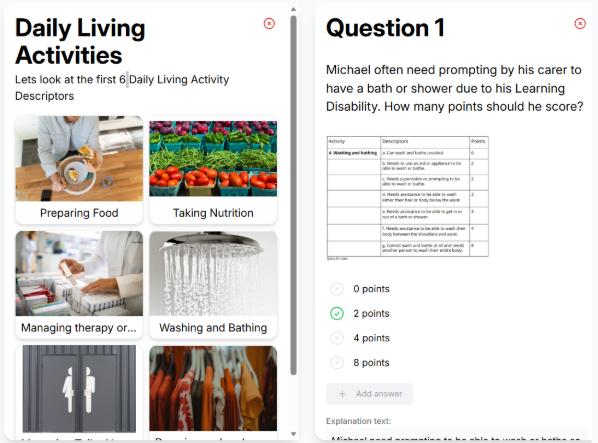
    Designed to reinforce learning, improve knowledge retention and build confidence, our Microlearning platform helps learners continue developing long after the live training session has finished.

    What is Microlearning? 

    Microlearning is a modern approach to learning that delivers information in short, focused modules that can be completed in just a few minutes. 

    Each learning activity focuses on a single topic or key learning point, making it easier for learners to absorb, remember and apply new knowledge in the workplace. 

    Rather than overwhelming learners with large amounts of information in one sitting, Microlearning delivers engaging content when it’s needed most—helping learning become part of everyday practice. 

    Why Add Microlearning? 

    Research consistently shows that people forget much of what they’ve learned unless they revisit and reinforce it. 

    Microlearning bridges the gap between attending training and putting learning into practice. 

    Adding Microlearning to your Society Matters training helps to: 

    • Improve knowledge retention 
    • Reinforce key learning after training 
    • Build learner confidence 
    • Support behavioural change 
    • Encourage continuous professional development 
    • Maximise the return on your training investment 

    Each learner receives approximately 90 minutes of additional bite-sized learning, specifically linked to the training course they’ve attended. 

    What’s Included? 

    Our interactive platform combines a range of engaging learning methods, including: 

    🎥 Short videos 

    🧠 Interactive quizzes 

    📖 Digital flip cards 

    💬 Scenario-based learning 

    🤖 AI-powered personalised learning journeys 

    🏆 Gamification, achievements and learner rewards 

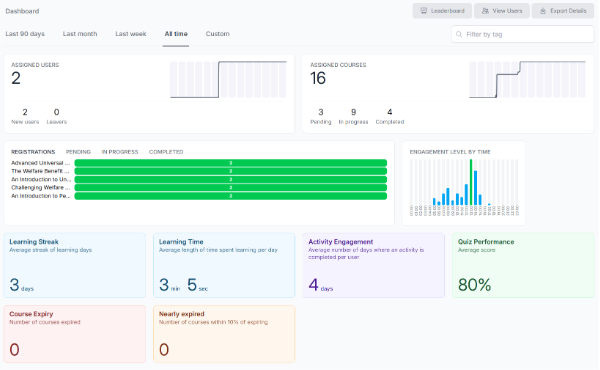
    📊 Progress reporting and learner analytics 

    The platform adapts to each learner, helping them spend more time on the areas they find most challenging, creating a personalised learning experience that improves long-term retention. 

    Perfect for Busy Professionals 

    Whether your teams work in advice, housing, local government, charities, health, employment support or leadership roles, Microlearning allows them to continue learning at a pace that suits them. 

    Modules are: 

    • Accessible on demand 
    • Mobile and computer friendly 
    • Quick to complete 
    • Easy to revisit whenever needed 

    Learning fits around busy working days rather than interrupting them. 

    Simple to Add to Your Training 

    Adding Microlearning couldn’t be easier. 

    Simply browse our training courses as normal. 

    When you’ve selected the course you’d like to book, you’ll have the option to add Microlearning before completing your purchase. You can buy our Microlearning content as an individual or as a team. Check out our pricing slider here 

    Following your training, learners will receive access to their personalised Microlearning programme. 

    It’s that simple. 

    Looking for Something Bespoke? 

    Our Microlearning platform isn’t just available as an add-on to Society Matters training. 

    We can also design fully bespoke Microlearning programmes tailored specifically to your organisation. 

    Whether you’re looking to create: 

    • Staff induction programmes 
    • Compliance training 
    • Policy updates 
    • Leadership development 
    • Customer service training 
    • Internal learning resources 
    • Refresher programmes 
    • Service-specific knowledge libraries 

    Our team will work with you to create engaging, interactive learning that reflects your organisation, your branding and your objectives. 

    Using videos, quizzes, branching scenarios, AI-powered learning journeys and gamification, we can transform your existing knowledge into engaging digital learning experiences that your staff will actually enjoy completing. 

    Whether you’re supporting 20 employees or 2,000, we can help create a solution that fits your organisation. 

    Ready to Extend Your Learning? 

    Microlearning is now available as an optional add-on to all Society Matters CPD-accredited training courses. 

    Simply choose your training course and add Microlearning during the booking process to continue learning long after the training has finished. 

    If you’d like to discuss a bespoke Microlearning solution for your organisation, we’d love to hear from you. 

    📧 Email: hello@societymatterscic.com 

    Together, let’s make learning last longer. 

  • Universal Credit Sanctions: Do They Help People Into Work – or Push Them Further Into Hardship?

    Universal Credit Sanctions: Do They Help People Into Work – or Push Them Further Into Hardship?

    For many people claiming Universal Credit, the word “sanction” carries a great deal of anxiety. 

    A sanction is a reduction in benefit payments that can be imposed if someone is judged not to have met the conditions attached to their claim. This might include missing a Jobcentre appointment, failing to complete agreed job-search activities, or not meeting other work-related requirements. 

    Supporters of sanctions argue that they encourage people to engage with employment support and move into work. Conversely, critics argue that they can also deepen poverty, worsen mental health and leave people struggling to meet their most basic needs. 

    As the cost-of-living crisis continues to affect households across the UK, questions about the fairness and effectiveness of sanctions have become increasingly urgent. 

    For people already living on a very low income, even a short reduction in benefits can have serious consequences. 

    Universal Credit is intended to help cover essentials such as food, heating, transport and housing costs. When a payment is reduced, claimants may be forced to make impossible choices between these necessities. Some may fall behind on bills or rent, while others turn to food banks, borrow from family members or take on debt to get through the sanction period. 

    For these households, a sanction is not simply an administrative penalty. It can mean skipping meals, going without heating or falling into rent arrears. 

    The main argument for sanctions is that they encourage people to engage with the benefits system and increase their chances of finding employment. 

    In 2023, the DWP published a study on the effect of sanctions on employment outcomes for UC claimants, concluding that that people experiencing sanctions were more likely to move off of UC. However, they were also substantially less likely to move into paid employment. 

    In other words, people were leaving benefits, but not necessarily because they had found work. 

    This distinction matters. Leaving Universal Credit is not the same as achieving financial security. Some people may stop claiming because they become disengaged from the system, struggle to navigate the process, or feel unable to cope with the pressure associated with Universal Credit ‘conditionality.’ 

    For charities working directly with claimants, this finding echoes concerns that sanctions can sometimes push people out of support rather than into employment. 

    The Human Cost of Sanctions 

    The impact of sanctions extends beyond finances. 

    Research consistently links sanctions to increased stress, anxiety and poorer mental health. For people already dealing with illness, disability, caring responsibilities or unstable housing, the threat of losing income can be overwhelming. 

    Many charities report that fear of sanctions affects claimants even when no sanction is ultimately imposed. The possibility of losing income can create a climate of uncertainty and stress that affects people’s wellbeing and confidence. 

    Financial insecurity itself can also become a barrier to employment. When someone is worried about how they will pay for food or keep the lights on, searching for work becomes much more difficult. Attending interviews, accessing transport, maintaining internet access and managing day-to-day responsibilities all become harder when money is scarce. 

    People facing multiple disadvantages are often at greater risk of being sanctioned. This can include people with mental health conditions, learning difficulties, caring responsibilities, unstable housing situations or complex personal circumstances. 

    Among critics of the sanction regime, there is concern that a system designed to encourage employment may sometimes end up penalising people for challenges beyond their control. Behind every sanction statistic is a person trying to manage everyday life on a limited income. 

    For some, sanctions may act as an incentive to engage with employment support. But for many others, the evidence suggests they can increase financial hardship without improving, employment outcomes. 

    As politicians continue to debate the future of Universal Credit, one question remains at the heart of the discussion: should a social security system rely on financial penalties when those penalties can leave people unable to afford the essentials? 

    The growing body of evidence suggests that helping people into work requires more than sanctions alone. It requires a system that provides stability, security and meaningful support for those facing barriers to employment. 

    Society Matters are proud to say we run a full-day CPD-accredited course on Universal Credit Introduction and Advanced Universal Credit, where we discuss in detail how we can provide effective support to people with complex needs claiming UC to enable them to manage their claim effectively

  • Society Matters Group CEO Alison Dunn awarded MBE in King’s Birthday Honours

    Society Matters Group CEO Alison Dunn awarded MBE in King’s Birthday Honours

    The honour recognises Alison’s outstanding leadership and impact over a sustained period, both through her work with Citizens Advice Gateshead and more widely in shaping innovative, compassionate responses to some of the region’s most pressing social challenges.

    Under Alison’s leadership, the organisation has led a remarkable transformation and has grown into the Society Matters Group, bringing together Citizens Advice Gateshead, Society Matters CIC, the Society Matters Foundation and Suitability under a single, shared vision to empower people to make informed decisions and improve lives.

    Her leadership has been recognised both regionally and nationally. Alison has been named Charity Leader of the Year at the North East Charity Awards, Business Leader of the Year at the Inspiring Female Awards, and Levelling Up Leader at the Northern Power Women Awards, reflecting her influence as a leading voice for social justice and inclusive growth in the region.

    Alison has also spearheaded a number of high-profile initiatives that have delivered meaningful change locally and nationally. These include the Warm Spaces initiative, launched in response to the cost-of-living crisis and now replicated across the UK, alongside wider work to tackle fuel poverty and support vulnerable communities.

    She has also championed progressive approaches to employment and organisational culture, including the introduction of a permanent four-day working week and the organisation’s move to become a Real Living Wage employer, improving staff wellbeing and organisational performance.

    Alongside this work, Alison is widely recognised for her values-led leadership, bringing together partners across sectors to address inequality, improve access to support, and strengthen services across the North East. She is also the host of This Is The North, a podcast supported by the Society Matters Foundation that explores the issues shaping communities across the region and amplifies voices driving change.

    Alison Dunn, Chief Executive of Society Matters Group, said:

    I am incredibly honoured to receive this recognition, but this award does not belong to me alone. It reflects the dedication, compassion and hard work of the people I have the privilege to work alongside every day.

    Everything we have achieved has been a collective effort, driven by colleagues, partners and communities across the region who are committed to making things better for others.

    The North East is a place of resilience, kindness and strength, and it is that collective spirit which inspires everything we do. I am proud to be part of it.

    Barry Taylor, Chair of Trustees at Citizens Advice Gateshead said:

    We are immensely proud of Alison and this well-deserved recognition. Her leadership has shaped not only our organisation, but the wider conversation around how we support people, communities and systems to work better for everyone.

    Her ability to combine values, innovation and impact has set a standard for what leadership in our sector can and should be. This honour reflects the scale of that contribution and the difference it has made to thousands of people across the North East and beyond.

    Society Matters Group continues to build on this work, strengthening its role as a regional and national voice on social welfare, inequality and lived experience, and working in partnership with organisations across sectors to drive meaningful, lasting change.

  • HMRC Mileage Rate Changes for 2026/27 – What Workers and Employers Need to Know

    HMRC Mileage Rate Changes for 2026/27 – What Workers and Employers Need to Know

    Thousands of workers across the UK use their own vehicles for work every day — from care workers and housing officers to trainers, advisers and outreach staff. For years, many have argued that mileage payments simply haven’t kept pace with rising fuel, insurance and maintenance costs.

    The government has now confirmed that the Approved Mileage Allowance Payment (AMAP) rate for cars and vans will increase from 45p to 55p per mile for the first 10,000 business miles travelled each tax year. The rate above 10,000 miles remains at 25p per mile.

    Importantly, the change has been confirmed as being backdated to 6 April 2026, the start of the 2026/27 tax year. (gov.uk)

    Why was the mileage rate increased? 

    The change follows growing pressure from unions, charities, care organisations and financial campaigners who argued that the previous 45p rate no longer reflected the real cost of using a vehicle for work.

    Over recent years, drivers have faced significant increases in:

    • Fuel prices
    • Insurance premiums
    • Servicing and repairs
    • Tyres and maintenance
    • General cost of living pressures

    Many organisations warned that workers — particularly those in social care, housing, welfare support and outreach roles — were effectively subsidising work travel themselves.

    There were also concerns that low mileage rates were contributing to recruitment and retention challenges in sectors where staff are expected to travel regularly between appointments and communities.

    The government said the increase is intended to better reflect the real cost of business travel and provide additional financial support for workers using their own vehicles for work purposes.

    What are HMRC mileage rates? 

    HMRC mileage rates are the tax-free amounts employers can pay staff who use their own vehicle for qualifying business journeys.

    The payment is intended to help cover:

    • Fuel
    • Wear and tear
    • Insurance
    • Servicing and repairs
    • Vehicle running costs

    If employers pay at or below the approved HMRC rate, there is normally no tax or National Insurance to pay on the reimbursement.

    Current HMRC mileage rates for 2026/27 

    Vehicle Type     First 10,000 Business Miles      Over 10,000 Miles 
    Cars and vans       55p per mile                                          25p per mile
    Motorcycles          24p per mile                                          24p per mile
    Bicycles                  20p per mile                                         20p per mile

    Employers can also pay an additional 5p per mile for each colleague carried as a passenger during a work journey.

    Who is eligible? 

    The mileage allowance is generally available to employees and some self-employed workers who use their own vehicle for qualifying business travel.

    Eligible journeys may include: 

    • Visiting clients or customers
    • Travelling between work locations
    • Outreach and support visits
    • Attending meetings or training away from a normal workplace
    • Travel to temporary workplaces

    Journeys that are usually not eligible include: 

    • Normal commuting between home and a permanent workplace
    • Personal journeys
    • Travel using a company vehicle under a separate fuel or mileage arrangement

    HMRC makes a distinction between ordinary commuting and genuine business travel. In most situations, travelling from home to a normal office or workplace will not qualify.

    Case Study – How the New Mileage Rate Works 

    Sarah works for a community support organisation and regularly visits clients across the region using her own vehicle.

    She travels approximately 8,000 business miles each year.

    Before the change (45p rate) 
    8,000 × 45p = £3,600

    After the change (55p rate) 
    8,000 × 55p = £4,400

    Difference 

    Sarah receives an additional:
    £800 per year tax-free 

    For many workers, this extra support could help with rising fuel costs, vehicle repairs and household expenses.

    Can the increase be backdated? 

    Yes. The increase has been confirmed as being backdated to 6 April 2026.

    This means workers who completed eligible business mileage from that date may now be entitled to the higher 55p rate.

    If an employer has already reimbursed mileage at the previous 45p rate since April 2026, they may choose to make a top-up payment for the difference.

    Example 

    Emma completed 2,000 business miles between April and May 2026 and was originally reimbursed at 45p per mile.

    • Amount paid: £900
    • Amount due at new rate: £1,100

    Difference owed: 
    £200 
    Employers may now reimburse the additional amount tax-free.

    What if an employer pays less than the HMRC rate? 

    Some employers may still choose to reimburse below the approved HMRC mileage rate.

    If this happens, employees may be able to claim Mileage Allowance Relief from HMRC on the difference.

    Example 

    James drove 5,000 business miles.

    • HMRC approved rate: 55p
    • Employer paid: 35p

    Difference:
    20p × 5,000 miles = £1,000 shortfall

    James may be able to claim tax relief on the £1,000 difference through HMRC.

    It is important to remember this is tax relief — not repayment of the full shortfall amount.

    Keeping accurate records 

    Workers should keep accurate mileage records including:

    • Dates of journeys
    • Start and destination locations
    • Purpose of the trip
    • Total business miles travelled

    HMRC may request evidence if a claim is reviewed.

    Many organisations now encourage the use of digital mileage logs or mileage tracking apps to help staff maintain accurate records.

    Overall, the increase in the mileage allowance is likely to be welcomed by many workers who rely on their own vehicles to deliver essential services — particularly after years of rising motoring costs and financial pressure.