Category: Uncategorised

  • Carers Allowance 50 Years On: A Time to Reflect or Reform?

    Carers Allowance 50 Years On: A Time to Reflect or Reform?

    First introduced as Invalid Care Allowance in 1976 (it was thankfully renamed Carers Allowance in 2003), Carers Allowance has been a cornerstone of financial support for carers. At the time, it was groundbreaking; the first time the role of carers was acknowledged within the welfare state and the impact that carers have. It’s estimated that carers save the UK economy around £184 billion per year. For context, that is only a little less than the entire NHS budget.

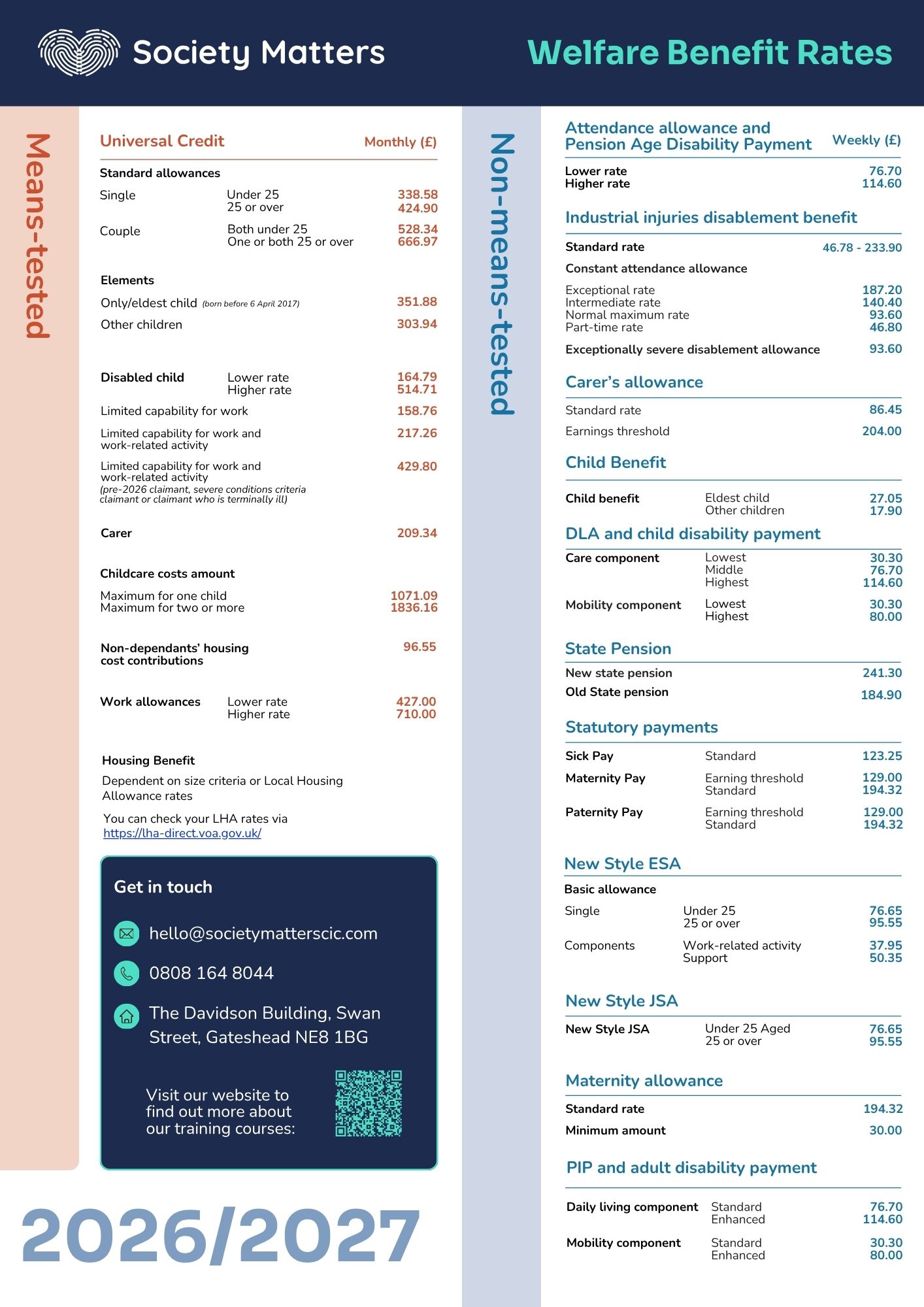
    Unfortunately, in comparison to this saving, the UK invests relatively little in its carers. Carers Allowance is worth a flat rate of £86.45 per week. Given that one of its criteria is to be caring 35 hours per week, it works out as an hourly rate of just £2.47.

    New research ‘Taking Care of Mum and Dad’ which surveyed 1000 unpaid carers, found that just 3 in 10 believe Carers Allowance is sufficient to live on. 10 percent had never heard of Carers Allowance, while 20% had heard of the benefit, but where unsure what it was. 60 percent said it was either ‘complicated’ or ‘very complicated.’

    The idea that the welfare system is complex is a common refrain we hear time and again. In the case of carers, it’s not just complex, it’s insufficient.

    The complexity of Carers Allowance is highlighted by the overpayment scandal that has blighted the DWP for years now and severely damaged its reputation in how it treats carers. When someone breaches the ‘earnings threshold’ of £204pw on Carers Allowance, they are, strictly speaking, no longer entitled to it. In many cases, the DWP/HMRC were receiving real-time notifications of breaches, but doing nothing, resulting in carers being overpaid and chased for those overpayments. Those carers that we so quickly say ‘thank you’ to were too often scapegoated. In April, the government confirmed that over 200,000 cases where carers were affected by ‘confusing’ government guidance would have their cases reviews and, potentially, debts cancelled. We commend the government for taking this step unequivocally, but how can we expect carers to rely on a system that seems fundamentally incapable of dealing with the reality of caring.

    As recently as last month, the DWP were criticized for contacting a carer’s employer to arrange for a deduction on her salary to repay an overpayment of Carers Element of Universal Credit (actually created in error by the DWP anyhow) that she had in fact paid back, in full, four years previously.

    Following the Sayce Review into the Carers Allowance overpayment scandal, it was noted that were ‘longstanding and unacceptable systemic problems with leadership’ at the DWP. Indeed, one former employee was criticized for posting on an internal DWP blogpage that he believed that ‘claimant failures’ were what led to the overpayment scandal rather than the action (or lack of action, one might say) of the DWP.

    The landscape of care has fundamentally changed since Carers Allowance was introduced in 1976, but unpaid carers are still the backbone of the care system, and they still deserve more than just a ‘thank you.’ Until the system has finally caught up to that reality and treats carers with the respect and support they deserve, this 50 years since the introduction of Carers Allowance can’t just be a mark of how far we’ve come, but how far we’ve got to go.

    Society Matters are proud to say we run a half-day CPD-accredited course on Caring and Carers Matters, where we discuss the different types of support available to help carers, whether that’s in respect of the welfare benefit system, social care, housing or employment. 

  • Pension Credit: Why Are We Still Here?

    Pension Credit: Why Are We Still Here?

    A recent release of statistics by the DWP highlighted that the number of Pension Credit claimants has fallen across the board. It comes in the wake a number of moves by the government to boost the uptake of Pension Credit. Think for example of the government’s plan to restrict the Winter Fuel Payments to pensioners in receipt of Pension Credit back in the Summer of 2024. More recently, the government have announced fresh plans to try and boost the number of pensioners receiving Pension Credit as people across the country to continue to grapple with cost of living pressures.

    The government estimate that around 900,000 eligible pensioners are not in receipt of Pension Credit which can act as a vital source of support for pensioners living on low incomes. Pension Credit itself comprises two elements; a ‘guarantee credit’ (for those whose income is assessed as being below a certain threshold) which can top their income up to a certain amount, as well as a ‘savings credit’ (for those who might only have a modest amount of savings or income, though this is only available to people who reach State Pension age before April 6th 2016). Higher amounts can be paid to those in certain circumstances, such as if you have a disability or caring responsibilities. Crucially, Pension Credit can act as a passport to various other kinds of welfare support such as council tax reductions, help with housing costs, help with certain NHS costs and even free TV licences. Pension Credit isn’t just about the money itself, it’s the benefits that go along with it that can also help an older people on low-incomes live their life with dignity and security.

    Why might this be the case, even after these repeated attempts by the government to boost the uptake of Pension Credit? Its important to say that the DWP don’t themselves publish data on why people don’t claim Pension Credit. With that said, there are certainly some inferences we can make.

    One argument put forward is that awareness campaigns can often focus on online promotion, something that older people may (somewhat stereotypically) not engage with. More recent targeted campaigns have highlighted the effectiveness of posting information. A drive to boost Pension Credit uptake in Autumn 2025 posted letters to 2000 eligible Pension Credit recipients informing them they could potentially make a claim. In an increasingly ‘online’ world, where digital access is prioritised, do we run the risk of leaving behind vulnerable older people for the sake of an incorrect presumption that things need be ‘online by default’?

    Unfortunately, incorrect myths and rumours persist around the eligibility for Pension Credit. Many people for instance think they won’t be eligible for it on the basis of savings. Whilst its true that savings over £10,000 might reduce the amount of Pension Credit you receive, truthfully, there is no hard limit that applies in respect of savings; its about the individual circumstances. Similarly, home ownership on its own isn’t a barrier to claiming Pension Credit. But these myths contribute to the perceptions people have around Pension Credit and ultimately affect the support they do (or in this case, don’t) receive.

    Society Matters are proud to say we are launching a new full-day course on ‘Benefits for Older People.’ The course provides a comprehensive introduction to the UK welfare system as it relates to older people. In it, we’ll explain the eligibility, application process and rates of current welfare benefits that apply to older people including the state pension, Pension Credit, Winter Fuel Payment or Attendance Allowance (as well as many others). The course also covers in detail the extra support available to those who receive Pension Credit (or other benefits) as well as how changes in circumstances like going into hospital or residential care can impact on a person’s benefit entitlement.

    If you’d like to find out more, get in touch with a member of the team at hello@societymatterscic.com.

  • Shut Out: The Quiet Reality of ‘Gatekeeping’ in Britain’s Homelessness System

    Shut Out: The Quiet Reality of ‘Gatekeeping’ in Britain’s Homelessness System

    There is a moment—often unseen—when homelessness begins.

    It is not always the night spent on a friend’s sofa, the final eviction notice, or the first night on the street. Increasingly, it is the moment someone walks into a local authority office, asks for help, and is told—subtly or directly—that they do not qualify.

    This is what housing professionals call “gatekeeping”: the refusal to accept a homelessness application or provide support when there is a legal duty to do so.

    It is not new. But the scale—and normalisation—of it should concern us all.

    A system under pressure—or a system closing ranks? 

    The UK’s homelessness crisis is deepening. Latest estimates suggest at least 354,000 people in England are homeless, including those in temporary accommodation, hostels or rough sleeping.

    At the same time, demand on councils has surged. Nearly 132,410 households were in temporary accommodation in mid-2025, a figure that continues to rise year-on-year.

    Local authorities, facing spiralling costs and chronic housing shortages, are being asked to do the impossible. Spending on emergency accommodation has surged, while supply has stagnated.

    And in this pressure cooker, the frontline response can shift—from support to scepticism.

    The hidden statistic: one in ten turned away 

    The most telling data does not come from government—but from those answering the phones.

    Between August 2024 and July 2025, Centrepoint recorded 449 cases of gatekeeping, representing 9.5% of all relevant calls to its helpline.

    That is roughly one young person every day being denied access to homelessness support they may be legally entitled to.

    Behind these numbers are familiar patterns:

    • Young people told to return home—even when unsafe
    • Survivors of domestic abuse asked for “more proof”
    • Applicants turned away due to disputed “local connection”
    • People discouraged from making an application altogether

    In some cases, councils are not outright refusing—they are delaying, deflecting, or raising barriers until people give up.

    As housing charity Shelter notes, delays themselves can amount to gatekeeping when authorities fail to accept applications promptly.

    When legality and reality diverge 

    Under the Homelessness Reduction Act, local authorities have clear duties to assess anyone who is homeless or at risk within 56 days, and to take reasonable steps to prevent or relieve homelessness.

    Yet the lived experience often diverges sharply from the legislation.

    A 2025 frontline snapshot highlights how “local connection” rules continue to be used as a barrier, with applicants passed between councils—sometimes repeatedly—while their situation deteriorates.

    And media investigations have uncovered cases where young people—including pregnant women—were unlawfully turned away, despite clear entitlement to support.

    This is not simply administrative failure. It is systemic drift.

    Why gatekeeping happens 

    To understand gatekeeping, we must look beyond individual decisions.

    At its core are three intersecting pressures:

    1. Severe housing shortages 
    There are simply not enough homes—particularly affordable ones—to meet demand.

    2. Financial strain on councils 
    Temporary accommodation costs have soared into the billions nationally, placing unsustainable pressure on local budgets.

    3. Rising demand 
    Economic instability, private rent increases, and welfare changes are pushing more households into crisis. In this context, gatekeeping can become an informal rationing tool—an attempt to manage demand by limiting access.
    But it comes at a cost.

    The human impact: crisis delayed, not prevented 

    Gatekeeping does not reduce homelessness.
    It redefines when it is recognised.

    People turned away rarely resolve their situation. Instead, they:

    • Present later, in greater crisis
    • Experience worsening mental health
    • Become harder—and more costly—to support

    By the time they return, prevention is no longer possible.

    The challenge for frontline professionals 

    For those working in advice, housing, and support services, this creates a complex reality:

    • Navigating legal entitlements vs local practice
    • Challenging decisions without damaging relationships
    • Supporting clients who have already lost trust in the system

    Understanding gatekeeping is no longer optional—it is essential.

    What needs to change 

    Addressing gatekeeping requires more than policy tweaks.

    It demands:

    • Stronger accountability for unlawful refusals
    • Better training and awareness of legal duties
    • Increased housing supply and funding 
    • A shift in culture—from gatekeeping to genuine prevention

    Because the law is clear:
    access to homelessness support is not discretionary—it is a right. 

    Closing thought 
    Gatekeeping thrives in the grey areas—between policy and practice, pressure and principle.

    But for the person standing at the counter, there is nothing grey about it.

    They are either helped—or they are not.

    And increasingly, too many are being turned away.

    Learn more: building confidence to challenge gatekeeping 

    At Society Matters, we’ve developed new training to support people working at the sharp end of housing and homelessness.

    Our course covers:

    • Identifying and evidencing gatekeeping
    • Understanding legal duties under the Homelessness Reduction Act
    • Practical strategies to challenge unlawful decisions
    • Supporting clients with complex needs through complex housing systems

    If you want to strengthen your confidence and support people more effectively, explore our “Making a Homeless Application” Training.

  • The Quiet Struggle of Claiming Disability Living Allowance for Children

    The Quiet Struggle of Claiming Disability Living Allowance for Children

    The Quiet Struggle of Claiming Disability Living Allowance for Children

    For many parents of disabled children, the most exhausting part of this month wasn’t the school runs, the hospital appointments, or the 3am wake-ups. It was the DLA for Children application process and application form.

    Disability Living Allowance (DLA) for children — administered by the Department for Work and Pensions — is designed to support families whose child needs “substantially more” care or supervision than a non-disabled child of the same age. It is not means-tested. It is not dependent on parental income. And yet, every week, families sit across advice desks, holding paperwork they do not understand.

    The problem is not simply bureaucracy. It is translation.

    A Legal Test Few Parents Are Shown

    DLA for children is governed by tightly defined statutory tests. To qualify for the care component, a child must require “frequent attention in connection with bodily functions”, or “continual supervision to avoid substantial danger”, or “prolonged or repeated attention” during the night. The mobility component carries its own criteria, including the need for guidance or supervision outdoors.

    These phrases are not decorative. They are decisive.

    But nowhere in the public-facing guidance are families meaningfully shown what they look like in real life. What does “frequent” mean? How long is “prolonged”? What counts as a “bodily function”? At what point does supervision become “continual”?

    Parents do not speak in statutory language. They say:

    “He has meltdowns.”
    “She doesn’t sleep.”
    “He has no sense of danger.”
    “I can’t leave her alone.”

    Decision-makers, however, are required to assess something else entirely: frequency, duration, functional limitation, comparative need. The gap between lived experience and legal threshold is where many claims fall.

    The Comparison No One Explains

    DLA for children is not awarded because a child has a diagnosis. It is awarded because their needs are “substantially in excess” of a non-disabled child of the same age.

    That comparison — central to the legislation — is rarely understood at the outset.

    A three-year-old needing help dressing is developmentally typical. A nine-year-old needing the same help may not be. A seven-year-old who cannot judge road danger may require supervision beyond that of peers. But unless parents are explicitly guided to frame their evidence in those comparative terms, they often understate the distinction.

    The result? Refusals or lower paid benefit awards that hinge not on absence of need, but on absence of phrasing.

    The Behavioural Blind Spot

    Families of children with autism, ADHD, sensory processing disorders or learning disabilities encounter a particular difficulty.

    Supervision for physical frailty is relatively easy to conceptualise. Supervision for impaired risk awareness is less visible. Yet a child who bolts into traffic, swallows inedible objects, wanders at night or cannot regulate impulses may require a level of vigilance that is both relentless and invisible.

    When parents describe “meltdowns” or “emotional dysregulation”, they are often met with a response that these are behavioural issues, not care needs. But when properly aligned with the statutory test — “continual supervision to avoid substantial danger” — the same facts can meet threshold.

    Too often, that alignment only happens at mandatory reconsideration or tribunal.

    The Night-Time Question

    Sleep disruption is one of the most common features of childhood disability — and one of the most misunderstood aspects of DLA claims.

    The night test requires “prolonged or repeated attention” or someone being awake to watch over the child. But the website does not meaningfully illustrate what this looks like in practice.

    Is settling a child three times a night “repeated”?
    Is 45 minutes of calming a sensory episode “prolonged”?
    Does lying awake listening for wandering count as being “required to be awake”?

    Parents guess. Decision-makers interpret. And when the two interpretations diverge, the letter arrives.

    The Form Before the Form

    Even the process of ordering the claim pack can be disorienting. Parents phoning to request DLA paperwork are often met with automated options referencing other disability benefits — including Personal Independence Payment and Attendance Allowance.

    Several families I have worked with were unsure whether DLA for children still existed. Others ordered the wrong form. Some delayed claiming altogether.

    It is a small administrative friction point. But for a parent already juggling therapies, EHCP meetings and employment pressures, small frictions compound.

    The Emotional Toll of “Proving” Your Child

    Perhaps the most corrosive part of the process is psychological.

    Parents must catalogue everything their child cannot do. They must quantify distress. They must document risk. They must answer questions about toileting, sleep, aggression, supervision — sometimes in forensic detail.

    And when a refusal letter arrives, it rarely says: “We believe your child struggles.” It says, effectively: “We do not accept that this meets the threshold.”

    The distinction is technical. It does not feel technical.

    The Cost of Getting It Wrong

    When decisions are corrected on appeal, the pattern is telling. Tribunals frequently succeed not because new facts emerge, but because existing facts are reframed within the statutory test.

    This suggests a systemic communication failure rather than widespread ineligibility.

    The financial impact of delay is significant. DLA can unlock additional support: Carer’s Allowance, disability premiums, blue badges, school transport considerations. A refused claim is not merely a lost weekly payment. It is a door left closed.

    What Would Help?

    Clarity, above all.

    Worked examples that explicitly map lived scenarios to legal criteria.
    Side-by-side explanations of “what parents say” and “what decision-makers assess”. Plain-English glossaries embedded within the form itself.
    Transparent explanation of what “substantially in excess” means at different ages.

    DLA for children is not a discretionary grant. It is a statutory entitlement. But entitlement depends on language — and language, in this context, is unevenly distributed.

    Until the system better translates between family life and legal threshold, parents will continue to do what they already do: seek advice, appeal decisions, and learn — often the hard way — how to speak in a dialect they were never taught.

    If the complexities outlined here resonate with your experience — whether you work in advice, social care, education or simply support families navigating disability benefits — there is practical training available that unpacks the entitlement tests, statutory language and evidence-gathering strategies in clear, usable terms.

    ⭐Society Matters offers an introductory course on Disability Living Allowance for children that takes you beyond legal summaries to the real-world skills needed to help families engage successfully with the system.

  • The End of Section 21: What the End of “No-Fault” Evictions Really Mean for Renters and Landlords

    The End of Section 21: What the End of “No-Fault” Evictions Really Mean for Renters and Landlords

    For decades, Section 21 of the Housing Act 1988 has allowed landlords in England to evict tenants without giving a reason. Often referred to as “no-fault evictions”, Section 21 notices have been criticised for creating insecurity in the private rented sector. That system is now coming to an end, with fixed deadlines set for its abolition.

    Under the government’s Renters Rights Bill reforms, Section 21 will be fully abolished in England in May 2026, marking a major shift in how private renting works.

    What is changing? 
    Currently, a landlord can serve a Section 21 notice giving at least two months’ notice and, if the tenant does not leave, apply to the court for possession. No reason needs to be given, provided the notice is valid.

    This will change in stages:

    • Up to 30 April 2026: Landlords can still serve valid Section 21 notices.
    • From 1 May 2026: Section 21 notices can no longer be served at all.
    • By 31 July 2026: Any Section 21 notice served before the April deadline must already have court proceedings underway to remain valid. After this date, Section 21 can no longer be used in possession claims.

    Once these deadlines pass, eviction without reason will no longer be possible.

    What replaces Section 21? 
    After Section 21 is abolished, landlords will only be able to seek possession using a Section 8 eviction notice. Section 8 requires landlords to rely on specific legal grounds, such as serious rent arrears, antisocial behaviour, or the landlord wanting to sell the property or move in themselves.

    Unlike Section 21, Section 8 cases can be challenged by tenants and must be assessed by a judge, who decides whether eviction is justified based on evidence.

    Why is Section 21 being removed? 
    The government’s stated aim is to improve stability and fairness in the private rented sector. Campaigners have long argued that the threat of no-fault eviction discourages tenants from reporting disrepair or challenging unfair practices. The removal of Section 21 is intended to give renters greater confidence and security in their homes.

    The reform also reflects the reality that renting is now a long-term option for many households, rather than a temporary stage before home ownership.

    What does this mean for tenants? 
    For renters, the abolition of Section 21 represents a significant increase in security. From May 2026 onwards, a tenancy cannot be ended without a stated reason. While tenants can still be evicted if they breach their agreement or if a landlord has a legitimate need for the property, evictions will be clearer, more transparent, and subject to scrutiny.

    Tenants who receive a Section 21 notice before 30 April 2026 should still take it seriously, as it may remain enforceable if the landlord follows the correct legal steps and starts court action in time.

    What about landlords? 
    Landlords argue that Section 21 has provided flexibility, particularly when circumstances change or relationships break down. Its removal means landlords will need to plan more carefully and rely on specific possession grounds, supported by evidence.

    To address these concerns, the reforms are expected to strengthen certain Section 8 grounds, including cases where landlords want to sell or occupy their property. However, possession is likely to involve more legal process and, in some cases, longer timescales.

    A major shift in renting 
    The abolition of Section 21 marks a fundamental change in the balance between landlord flexibility and tenant security. With clear cut-off dates now set, both renters and landlords have time to prepare for a system in which eviction without explanation is no longer permitted.

    How effective the new framework will be depends on clear guidance and a court system capable of handling disputes efficiently. What is clear, however, is that from May onwards, the era of no-fault evictions and the stress and uncertainty they imposed on tenants in England will be over.

    Working on the frontline of housing and homelessness means keeping up with fast-changing legislation while supporting people in crisis.

    Society Matters’ Housing and Homelessness Training is designed for frontline practitioners, housing officers and support workers, offering practical, accessible insight into reforms such as the end of Section 21, the future increase in Section 8  and their real-world impact. Find out more about upcoming courses on our website.