For most of us, losing access to an email account, changing a mobile phone number or forgetting a password is an inconvenience. We reset it, update our details and move on.
But imagine that account is the gateway to proving your right to live in the UK. Or to start a new job. Rent a home. Travel. Or simply demonstrate that you have the immigration status you know you have.
That is the reality facing a growing number of people as the UK’s immigration system becomes digital.
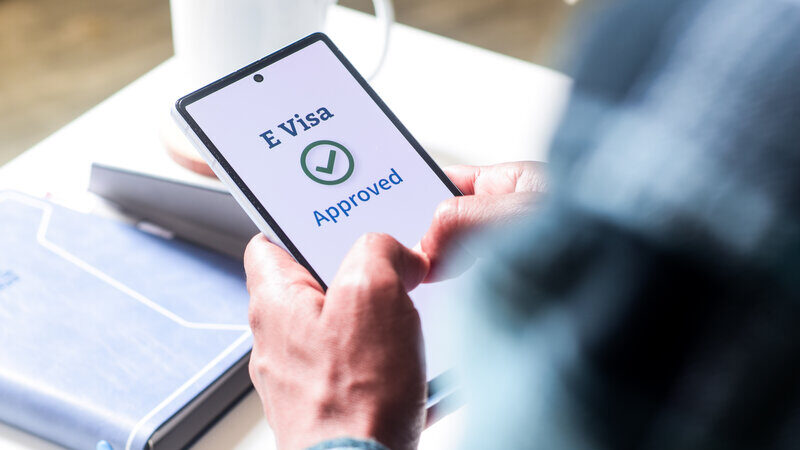
An eVisa is a digital record of a person’s immigration status and the conditions attached to it, such as whether they have permission to work or study in the UK. It has largely replaced physical immigration documents such as Biometric Residence Permits (BRPs) and Biometric Residence Cards (BRCs), as well as many passport stamps and visa stickers.
Instead of producing a physical document, people access their immigration status online through a UK Visas and Immigration (UKVI) account. They can then use online services to prove their status to employers, landlords and other organisations.
The government’s reasoning for the change is understandable. A digital immigration record cannot be physically lost, stolen or tampered with in the same way as a card or document. Information can be kept up to date and immigration status can be checked securely online. It also forms part of the wider ambition to create a modern, digital UK border and immigration system.
And this is not a small change affecting a handful of people. More than 10 million visa holders now use an eVisa to prove their status, including around six million people with status under the EU Settlement Scheme.
For millions of people, digital immigration status isn’t something coming in the future. It is already part of everyday life.
When digital doesn’t necessarily mean accessible
For someone who has a smartphone, a stable email address, their identity documents to hand and confidence using online services, accessing an eVisa may be relatively straightforward.
But frontline services don’t only work with people whose lives are that straightforward.
Think about someone who has recently left prison and no longer has the mobile phone or email account they previously used. A refugee with limited English trying to navigate an unfamiliar government system. Someone experiencing homelessness with intermittent access to a phone, email or Wi-Fi. Or an older migrant who has lived legally in the UK for decades and has always relied on a physical document to demonstrate their status.
There are also much more everyday situations. Someone renews their passport and doesn’t realise they need to update their UKVI account. They change their phone number. They forget which email address they originally used. Someone else helped them create the account and they don’t know the login details.
None of these circumstances are particularly unusual.
But when your immigration status exists digitally, they can suddenly become significant.
A digital problem can quickly become a real-world problem
The consequences can extend far beyond frustration with a website.
People may need to access their eVisa to demonstrate their immigration status or generate a share code when starting a new job or renting a home. Keeping passport and travel document information linked to a UKVI account up to date can also be particularly important when travelling.
That means something as simple as losing access to an old email account can potentially become a barrier to employment, housing or travel.
For somebody who is already experiencing unemployment, financial hardship, insecure housing or other difficulties, another barrier is the last thing they need.
And there is another side to this transition which receives less attention: the people being asked to help.
The growing challenge for frontline staff
Employment advisers, housing officers, refugee and migrant support workers, resettlement teams, prison-leaver services, community organisations and advice workers are increasingly encountering people who need help navigating their digital immigration status.
The questions can sound deceptively simple.
“I can’t get into my UKVI account. What do I do?”
“I’ve changed my phone number.”
“My employer wants a share code.”
“I’ve got a new passport. Do I need to do anything?”
“I have Settled Status, but how do I prove it?”
“I’ve lost my BRP. Does that mean I’ve lost my status?”
For a frontline worker who isn’t an immigration specialist, knowing how to respond can understandably feel daunting.
There is an important distinction here. Helping somebody navigate a UKVI account, update their details or understand how to generate a share code is very different from advising somebody about which immigration status they should have or what immigration application they should make.
Frontline professionals need confidence on both sides of that boundary: understanding what practical help they can provide but also recognising when a person’s situation requires specialist immigration advice.
Sometimes the right questions make all the difference
One of the most important things we’ve found when developing our training is that good eVisa support doesn’t always start with a computer. It starts with a conversation.
Does the person already have a UKVI account? Can they access the email address connected to it? Do they still have the same mobile number? Do they have their passport, travel document or old BRP? Have they recently renewed their passport? Has someone else previously helped them manage their account?
And, crucially, what are they actually trying to do?
Do they need to start a job? Prove their right to rent? Travel? Update a document? Or simply access and understand their immigration status?
Asking those questions first can turn what initially appears to be an overwhelming problem into something much more manageable.
It also highlights why digital exclusion needs to be part of the conversation around eVisas. Not everyone will be able to navigate these processes independently. People with limited English, limited digital skills, disabilities, insecure access to technology or particularly complex lives may need additional support.
The people who find digital systems hardest to navigate can often be the very people who have the most to lose when something goes wrong.
Building confidence on the frontline
At Society Matters, we have developed our new half-day CPD-accredited course Supporting People with eVisas: A Practical Guide to Digital Immigration Status in response to these challenges.
Rather than trying to turn frontline workers into immigration advisers, the course is about giving them the practical knowledge and confidence to recognise and resolve the everyday eVisa issues they are increasingly encountering.
Delegates explore:
- what eVisas are and why the system has changed
- the different immigration statuses that use eVisas
- UKVI accounts and how they differ from an eVisa
- creating and accessing a UKVI account
- recovering access when things go wrong
- updating passports, travel documents and contact details
- using the View and Prove service
- generating share codes for work, rent and other purposes
- troubleshooting common problems
- supporting people experiencing digital exclusion
- recognising when specialist immigration advice is required
The training uses practical demonstrations, real-life scenarios, quizzes and troubleshooting activities, alongside a delegate resource pack containing links to official guidance and support.
Because ultimately, digital systems should remove barriers rather than create new ones.
And when they don’t, having someone on the frontline who understands the system, knows the right questions to ask and can calmly help someone find their way through it can make all the difference.
For more information visit our website here or email us at Hello@societymatterscic.com