Author: Society Matters

  • New Video Help Series | Personal Independence Payments (PIP)

    New Video Help Series | Personal Independence Payments (PIP)

    Personal Independence Payments (known also as PIP) are geared to doing exactly what it says on the tin – helping people to achieve an improved level of personal independence despite experiencing a disability.

    Several of our customers who work in the welfare support sector in some shape or form, particularly those who have attended our Getting to Grips with Universal Credit course, have told us that they also struggle to understand the complexities of PIP, worrying that their clients might not get the best possible support when completing their PIP application. Evidence shows that a high proportion of people who apply for PIP actually fail in their application – indicating that this is a real concern. Many of those with failed applications ultimately do go on to successfully acquire the benefit when it is recognised that the first decision wasn’t fair, however this is often after pursuing a long appeals process which causes delay, money worries and of course a lot of stress.

    In 2019 the Disability News Service reported that DWP’s own statistics show that as many as one in seven of all government decisions to reject claims for personal independence payment (PIP) is eventually overturned, a rise of 6 percentage points since 2014/15. They also suggest that this is probably the tip of the iceberg as many such decisions aren’t actually challenged.

    So what can we do to help people who are entitled to PIP make a successful claim?

    Society Matters cic aims to make its mark by mobilising the knowledge of the people who do know amongst those who don’t – our learning programmes draw expert knowledge from the people working at the front end of social welfare, based on the principle that the more people and organisations within the system who understand the detail the better the system can support the people who need the help.

    As well as a half day workshop to really dig into the detail, we have developed some short introductory videos as an introduction to PIP and the PIP application process. This is the beginning of our Video Help Series – let us know if you need help in other areas as it’s your feedback and ideas that will help us to make sure our resources really make a difference.

    Introduction to PIP
  • Introduction to Personal Independence Payments PIP

    Introduction to Personal Independence Payments PIP

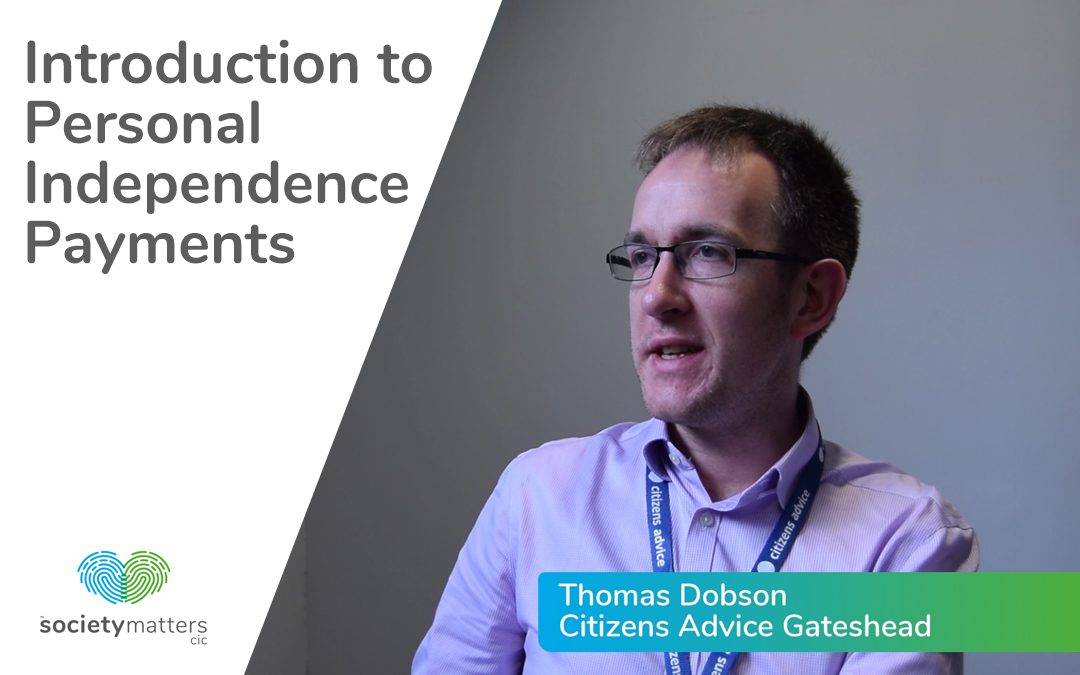
    We had a brief chat with an expert adviser at Citizens Advice Gateshead to get an introduction to Personal Independence Payments.

    This 4 minute video is the first of a series aimed at supporting an improved understanding amongst support organisation of social welfare benefits, including Universal Credit and Personal Independence Payments.

    If you’ve found this short video useful please sign up to our mailing list to receive a notification when the next video in our social welfare benefits series is released.

  • Dealing with unfair treatment at work

    Dealing with unfair treatment at work

    Work should be a rewarding environment. Yes, we all have bad days, but if you have a job with supportive colleagues and managers you should expect to be happy in your work most of the time. Unfortunately this isn’t always the case. Some employees may end up facing unfair treatment at work, and this can have a negative impact on both their physical and mental health as well as making the workplace a difficult place to be, no matter how generously they may be paid for what they do.

    When you are facing unfair treatment at work it can take a while to realise that it’s not you that’s the problem but the person or people handing out the unfair treatment. It’s also sometimes not so easy to recognise that the way you’re being treated may actually be classed as discrimination, and is therefore against the law.

    We talked this through with Richard Owen, our Job Law Employment and Discrimination Specialist who has over 35 years’ experience in this field, and Associate Employment Solicitor Azra Choudry, who has recently joined Richard to help people facing challenges with their employment. We asked Richard and Azra about how to spot unfair treatment in the workplace, and this is what they had to say:

    Unfair treatment at work – and when is this discrimination?

    We live in a diverse and vibrant society and our law recognises these differences, giving everyone a right to be protected equally under the Equality Act 2010. This legislation defines the nine ‘protected characteristics’ as:

    • Age
    • Disability
    • Gender reassignment
    • Marriage and civil partnership
    • Pregnancy and maternity
    • Race
    • Religion or belief
    • Sex
    • Sexual orientation

    If you think you are being unfairly treated, and this has anything to do with any of these protected characteristics, chances are you are being discriminated against at work.

    How to spot unfair treatment at work and what to do next

    Richard and Azra describe how unfair treatment at work can stem from small issues relating to the way your Manager or colleagues interact with you.

    Types of unfair treatment in the workplace can include:

    • Bullying (e.g. being shouted at or humiliated in front of colleagues);
    • Being given an excessive workload;
    • Being expected to achieve unrealistic targets;
    • Micro-management;
    • Exclusion from team activities, meetings and challenges;
    • Being picked on or singled out by Managers or colleagues;
    • Not being given the opportunity to participate in training or personal development.

    If you notice you are being treated differently at work compared with other employees you should raise your concerns with your employer, but Richard and Azra also suggest you might find it helpful to follow these guidelines first:

    1. check your contract – make sure you are familiar with your employment contract to understand what it is you agreed upon starting your employment and what has happened since;
    2. keep a record – if you feel you are being treated unfairly make sure you keep a record of dates, emails, texts and events that may help you if you need to prove your case in the future;
    3. act quickly but not on the spur of the moment – whilst you should act as quickly as possible when you feel you are being mistreated we would advise against resigning immediately without getting advice first. You should always consider making a formal grievance to your employer to try to resolve the issues. If you do feel you have to resign make sure you explain the reasons in writing.

    Am I being discriminated against?

    Sometimes the motive behind the unfair treatment can relate to one of more of the protected characteristics that we mentioned earlier, and in that case it may be classed as discrimination. For example,

    One of the most common forms of discrimination found in the workplace relates to disability. According to research carried out by Scope, the disability equality charity in England and Wales, a staggering 48% of survey participants were unware of their rights as disabled employees. The report also goes on to say that 1 in 4 also believed they had missed out on securing a job due to their condition or impairment.

    report from the Young Women’s Trust also outlines issues like gender discrimination to be a lot more common within the workplace than you might think. For example 23% of woman aged 16 – 30 admitted that they had faced sexual harassment at work but only 8% of these women reported their situation.

    The Race at Work report published findings that showed 28% of employees from Black, Asian and Minority Ethic (BAME) backgrounds had experienced racial harassment or bullying from their manager in the last five years.

    If you think you are experiencing some of these issues or other unfair treatment associated with the nine protected characteristics, and wonder whether you may have a potential discrimination case against your employer, Azra suggests that it is always best to compare how you are being treated against other colleagues without your protected characteristic first. Ask yourself, compared to my colleagues …

    1. Am I being treated unfairly?
    2. What is the reason for the treatment?
    3. Am I being treated differently to others?
    4. Am I being put at a disadvantage compared to others?
    5. Is there a direct link, or explicit words or actions, connecting the treatment and my protected characteristic e.g. specifically relating to gender, race, disability etc.
    6. Is there another plausible explanation for the treatment?

    If, having considered these points, you think the unfair treatment is due to your protected characteristics you should read this article from Citizens Advice which provides you a clear 3 step plan on what to do next if you think you are being discriminated against at work.

    Seek Advice from Job Law

    If you feel like you have experienced unfair treatment or discrimination in the workplace you may want to talk it through with an employment law specialist before you take action. Richard Owen and Azra Choudry are here to help.

    Get in touch today at info@societymatterscic.com

  • WHERE NEXT? TRAINING – Gateshead | October 2019

    WHERE NEXT? TRAINING – Gateshead | October 2019

    Where Next? Training

    Where Next? is a free short course for people in Gateshead who are considering their options for getting back into work.

    • Learn about how to make the most of your money living on a tight budget
    • Discover how you can volunteer locally to build skills and self-confidence
    • Be supported by a local mentor to think through your goals and options
    • Get involved in short work experience sessions and learn new skills

    GATESHEAD | DECKHAM

    The Elgin Centre, Elgin Road, NE9 5PA
    Tuesday 29th October 1.00pm – 3.00pm

    GATESHEAD | CENTRAL

    Citizens Advice Gateshead, The Davidson Building, Swan Street
    Wednesday 16th October 11.30am – 2.00pm

    GATESHEAD | SPRINGWELL

    Springwell Community Centre, Lanchester Avenue
    Started 30th September 2019

    “I now have more confidence and I’m able to do jobs I thought I couldn’t do … it was fantastic!”

    Find out more about our Where Next? Community Learning Project here

  • Accredited Learning Centre status for Gateshead social enterprise

    Accredited Learning Centre status for Gateshead social enterprise

    Society Matters CIC is proud to have been approved as an Accredited Learning Centre by national accrediting body ncfe.

    Executive Director Jayne Graham MBE is excited about the opportunity to deliver accredited training, as this will make a huge difference to the people the social enterprise supports.

    “Many of the people we support are looking for their next steps towards employment, so being able to provide a certificate or award that verifies what they have learnt on our programmes makes a huge difference. Qualifications not only demonstrate to an employer that the individual has committed to the learning programme and worked hard to achieve their certificate; they also make a huge difference to people’s self esteem, making it much more likely that they will apply for a job in the first place, and improving their performance in interviews”.

    Beth Ainslie, Project Coordinator

    Beth Ainslie, Project Coordinator at Society Matters CIC, has been supporting people through their community learning programmes for the past 12 months, and has first hand experience of the impact of being able to hand over a certificate. Beth explains

    “People who honestly thought they had nothing to offer have been overwhelmed when we have been able to award them a Certificate of Completion at the end of their programme, which involves a wide range of learning opportunities, including work experience, classroom learning and mentoring.

    Now being able to elevate this to a qualification will be even more transformational for the people we’re working with, most of whom are searching for where to go next in their lives.”

    As well as becoming an accredited learning centre, Society Matters CIC has received independent quality endorsement from ncfe for its unique approach to social welfare training. Training courses provide support organisations with the knowledge they need to add even more value to their clients. You can find out about courses running across the UK here.

    Society Matters CIC is a trading subsidiary of charity Citizens Advice Gateshead. The social enterprise, which is also registered as a community interest company, has the dual objective of adding social value whilst generating income to add to the resources of the charity to enable it to achieve its vision of a fair society for all with lives well lived.