Category: Uncategorized

  • Spring Budget: The Good, the Bad and the Ugly in 3 graphs

    Spring Budget: The Good, the Bad and the Ugly in 3 graphs

    Spring Budget: The Good, the Bad and the Ugly in 3 graphs

    Society Matters Social Welfare Instructor Adam Matthews gives us a quick overview on Wednesday’s Spring budget.

    The Good: Childcare

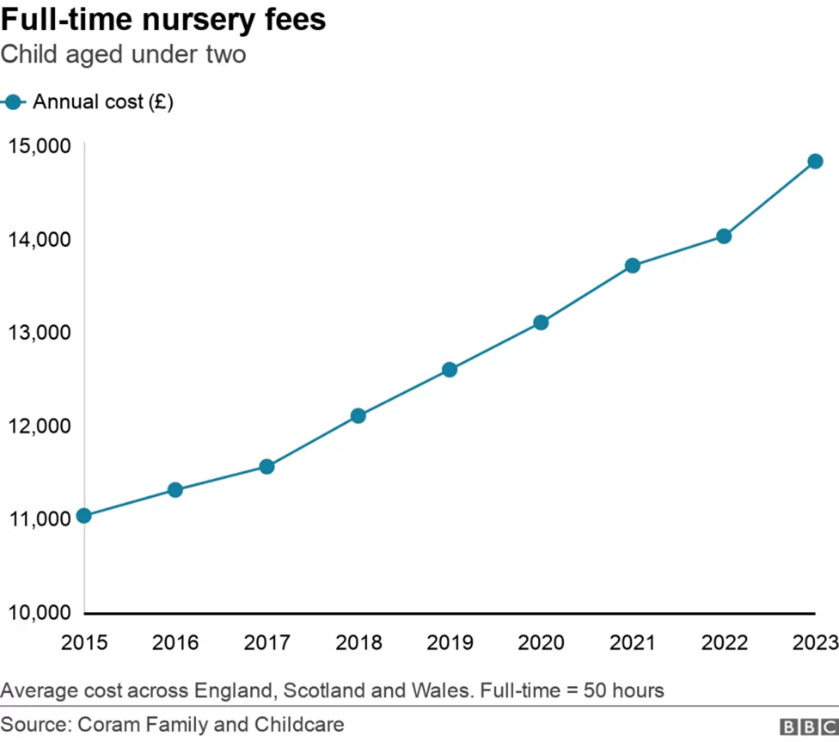
    As we well know, childcare costs were already a huge pressure on families before the cost-of-living crisis, with the UK ranking as one of the most expensive places for childcare in the world. Childcare costs have rocketed since 2013 (see graph below) and the average annual cost of a full-time nursery place for a child under two in Great Britain is now a staggering £14,836.

    Currently, working parents with three and four-year-olds are eligible for 30 hours of free childcare per week. It was yesterday announced that this will be extended to cover children below the age of three. There is no doubt this is a positive move for eligible families to have a bit more money in their pockets at the end of the month.

    It will eventually cover all children from the age of nine months according to the chancellor. The bad news is this policy will be staged and not implemented immediately.  The support will be staged, coming in for two-year-olds in April 2024, and September 2024 for those aged over nine months. Families are struggling now, and it would have helped to have been implemented immediately.

    The other good news is the government has agreed to pay childcare costs up front on Universal Credit. Previously it was paid in arrears so people responsible for children had to pay upfront and often struggled with this.

    The maximum amount people on universal credit can claim for childcare is also going up to £951 for one child, having been frozen at £646-a-month per child for several years. It will be £1,630 for two or more children. This is long overdue and will make a difference. It’s important to note this support will not be available on the old legacy benefits system and working tax credits.
    The Bad: Energy Prices and Bills

    The government have announced that support with energy bills will continue for another three months so a lot of people may ask why have I listed this as bad?

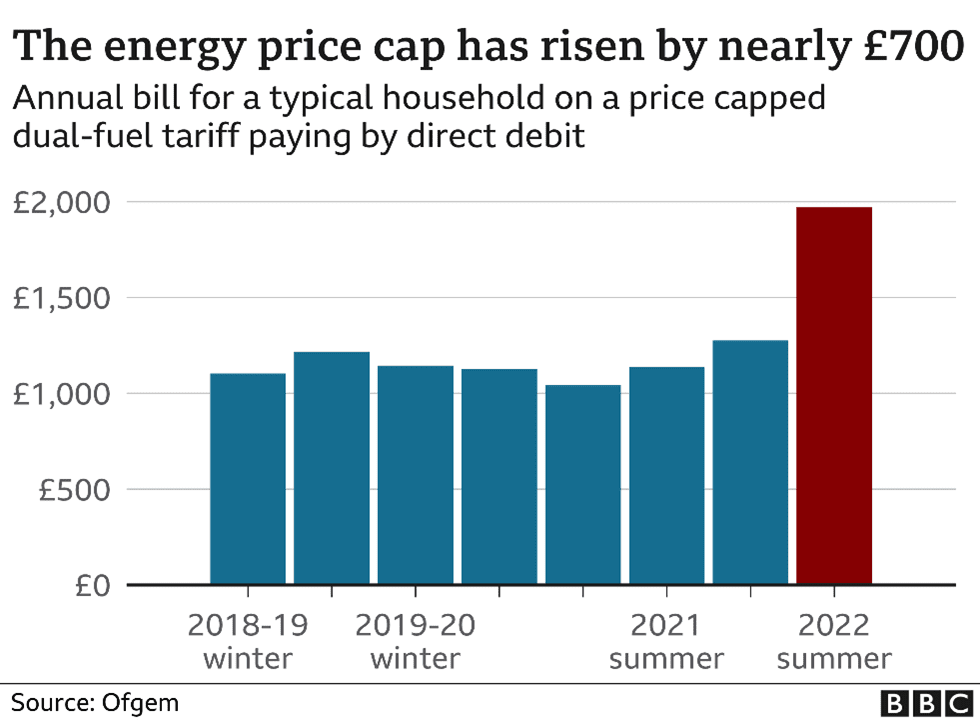
    Under the Energy Price Guarantee, the government has been limiting energy bills for a typical household to £2,500 a year, plus a £400 winter discount. However, it’s important to note this isn’t a cap, if you use more energy than the ‘typical household’ you will pay more.

    The bad news is typically, household bills are still double the level they were during the winter of 2021-22 and we have had several cold snaps recently with more to follow.

    Charities such as Citizens Advice are swamped with people unable to pay their energy bills or top up their prepayment meters and have been for months. In 2022 Citizens Advice saw more people who can’t top up their prepayment meter than in the whole of the last 10 years combined .

    As Energy Companies continue to make huge profits, we still have extremely high levels of fuel poverty, National Energy Action have predicted that 7.5 million people will still be in fuel poverty by April this year. I feel more is needed to be done on this front. A cheaper social tariff for vulnerable people on low incomes would be a better option with cost-of-living payments extended to families that need them.

    One long overdue announcement is four million prepayment meter customers will no longer pay more per unit of gas and electricity than those who pay via direct debit. However, this is not the end of differential pricing as things stand.

    If you pay quarterly, by cash or cheque then you are still likely to pay more than others for your domestic energy. So quite often this will be older or vulnerable people.

    Previously, the cost was higher and many people who use pre-payment meters are classed as vulnerable or already in debt with their supplier. There is still the risk of people self- disconnecting as they are choosing between heating and eating. The forced instalment of prepayment meters is still currently paused while Ofgem works out what to do next.
    The Ugly: Benefits Sanctions and changes to the Work Capability Assessment

    The chancellor called this budget the ‘working budget’ and quoted “Those who can work should work. Sanctions will be applied more rigorously for those who refuse to take up a reasonable job offer.” But as we all know many benefit sanctions are triggered when they often shouldn’t be. Sanctions can have a devastating affect where a claimant can lose up to £11 per day for up to 182 days.

    We have seen record numbers of sanctions recently, In the year to October 2022, DWP data shows that 523,967 UC sanctions were imposed. There were 117,865 in November 2022 alone which will have led to many claimants struggling financially over the Christmas period.

    Benefit Sanctions have been shown to have little positive impact on employability while impoverishing claimants and increasing mental ill-health, debt and poverty.

    The government have also announced that they are looking to scrap the often-criticised Work Capability Assessments for Universal Credit, which assesses claimants’ capacity for work, and instead using the personal independence payment (PIP) test, which measures the extra living costs of disability.

    But how will this work? PIP and Universal Credit are two very different benefits, assessing different things. Also, as we know there are already huge backlogs and waiting times for both PIP assessments and decisions, so will these people be expected to look for work, struggle and inevitably be sanctioned? We will keep you updated on these changes when the government releases further information.

  • Why our courses can now earn you CPD points

    Why our courses can now earn you CPD points

    At Society Matters cic we’ve built a reputation for delivering great training that people need and want. But we’re also not resting on our laurels. We’re continuing to learn from our customers as much as our customers learn from us, and we listen.

    When we were asked why our courses weren’t accredited by the CPD Certification Service we had to ask ourselves the same question. Most of our training is delivered to professionals so it stands to reason that you’d want to align the time you’ve spent on our courses and workshops with your other professional development.

    So in the Autumn last year we set ourselves the target of getting at least 10 of our courses accredited by the CPD Certification Service within 12 months, and we’re already well on our way, with 3 courses already accredited and 3 more planned this side of Easter.

    What does CPD Certification mean?

    First of all CPD is a mark of quality. We are proud of the wonderful feedback we receive on our course content and delivery approach, but also recognises that having independent endorsement is so important.

    With CPD certification our customers can have absolute confidence in the quality of the material, the content and the delivery approach, so the learning opportunity will have the best possible impact on both personal and organisational development. For training to be awarded CPD certification it will always have been independently assessed and scrutinised to ensure integrity and quality to a high level.

    Over and above this, by attending a CPD certified course our customers are awarded CPD points which holds a genuine value in professional development terms, whether that’s simply through the CPD certificate we award after the training, or a serious contribution towards the continuous professional development standard expected by your professional body.

    CPD Certified courses – at the same affordable price

    We’ve prioritised the development of our most popular social welfare courses, and are proud to have now achieved CPD Certification, as well as being able to keep our prices at a level we know our customers can afford.

    Get to Grips with Universal Credit (5½ CPD points)
    Get to Grips with Personal Independence Payment (5 CPD points)  and
    Introduction to Current Welfare Benefits (3½ CPD points)

    Next up are our popular ‘Managing and Stress and Avoiding Burnout’ and ‘Mental Health Awareness’ courses, both of which have had rave reviews so you can book now with confidence that CPD accreditation will be in place by the time you attend.

    If there’s a course you’re keen to see CPD certified let us know, and we’ll keep you posted on progress over the next few months. If you haven’t already, sign up to our mailing list so we can keep you updated.

  • Jayne Graham MBE FIEP talks to IEP about the value of volunteering

    Jayne Graham MBE FIEP talks to IEP about the value of volunteering

    We were so proud to see our MD, Jayne Graham MBE, made a Fellow of the Institute of Employability Professionals (iep) at the end of last year, a fitting tribute to Jayne’s work over many years in the field of employability. 

    In December she was invited by the iep to lead a webinar about the value of volunteering as a route to employment and improved employability. Jayne talked about the need for us to ‘change the narrative’ around volunteering, and not be afraid of acknowledging that people can gain a lot from it for themselves, as well as it being a great way of giving back to others. 

    You can watch the webinar here.

  • Now more than ever housing is an employment issue

    Now more than ever housing is an employment issue

    Why should we think about housing as an employment issue?

    It is generally accepted that a stable home is a central plank in anyone’s life. So, it stands to reason that housing is also fundamental to employment and employability. But what housing issues should we be thinking about as employers, aiming to support employee wellbeing, and as employability professionals supporting unemployed people to get back into work?

    Location, Location, Location

    Before looking at the housing challenges being faced by people on a detail level, I thought it would be useful to take a bird’s eye view first.

    The connection between housing with employment actually spans quite a broad spectrum of socio-economic issues, but location stands out as a main concern for a couple of reasons.

    • Affordability of housing within a reasonable proximity to a workplace will determine how inclusive recruitment can really be, particularly for part-time and low paid jobs (low paid is classed as those paid less than two thirds of median hourly pay). So where someone lives can be a key determining factor in whether they can work, what work is available to them, and how much they are realistically able to earn, as well as determining their overall cost of living.
    • Productivity, with a clear link between housing location and productivity this is a key factor for employers to consider. Interestingly this report from Mercers actually finds that productivity reduces in line with the length of the commute (employees commuting less than half an hour to get to work gain an additional seven days’ worth of productive time each year compared to those with commutes of 60 minutes or more), and that longer commutes appear to have a significant impact on mental wellbeing, “with longer-commuting workers 33% more likely to suffer from depression, 37% more likely to have financial concerns and 12% more likely to report multiple dimensions of work-related stress.” It also stands to reason that employee retention suffers from long distances.

     Getting a job and keeping a job

    In light of the importance of proximity, maximum 30 minutes journey time being considered to be the optimum for productivity and personal wellbeing, it’s really interesting to note the following:

    Claimants for Universal Credit are expected to search for a job located up to 90 minutes travel from their home, a key feature of the DWP’s ‘Claimant Commitment’, the work search contract with DWP which has to be fulfilled for a claimant to successfully receive their benefit.

    We need to be thinking carefully about this when supporting people in job search activities. When they get a job will they stay in it if they live too far away, while they’re working will their productivity be impacted by the distance they’re travelling, potentially impacting on how well they are regarded by their new employer, so also affecting future job search prospects if things don’t work out?

    For current employees making sure that we really do focus some attention on supporting the welfare of staff who are commuting for over half an hour needs to be a priority for employers. Obviously the increased prevalence of homeworking has started to address this issue for some, but as we know many jobs practically can’t be done from home.

    The impact of eviction and homelessness

    Now moving on to thinking more about some of the real-life housing challenges people are facing, the worst case scenario has to be the threat of eviction and homelessness and the huge impact that this obviously has on families and employability.

    An employee asking for time off work to ‘present as homeless’ to the local authority is unlikely to be something that HR teams have been faced with too regularly, but it really is an increasing problem that has grown even before the financial challenges presented by the pandemic. Alongside the need to take time off work, just facing the prospect of viewing emergency accommodation and the anxiety of being able to find a safe and affordable home as soon as possible can have a devastating effect on mental health and wellbeing. This often results in people being unable to work or, again, can lead to performance issues in the workplace.

    If we take it back to basics, the basic physiological need for shelter as explicit in Maslow’s Hierarchy of Needs is the very foundation of a life well lived. Right now, it’s reported that 17.5 million people in Britain are facing a housing emergency.

    That’s one in three adults, and what if you have children to think about too? With children included this number rises to a staggering 22 million people.

    A recent report ‘Heads above Water’ by the National Federation of ALMOs analysing how council tenants and landlords have fared through the pandemic, demonstrated that 80% of income officers had reported higher rent arrears, 77% had seen increased demand for support services and the same number reported increased use of food banks and increased fuel poverty. Three quarters of income officers had also seen increased demand for hardship funds across the UK in the last year. A tidal wave is upon us.

    Debt charity StepChange also reports a similar number of struggling tenants, and estimates that 150,000 are at risk of eviction. It says £370m of arrears has been built up as a result of Covid and that more than 850,000 households renting a home are worried about being evicted in the next few months, according to the Joseph Rowntree Foundation. Of these, 400,000 have already been served with an eviction notice or told they may be evicted and almost half a million other households are in arrears.

    To make the situation worse, many local authorities are stating they will not consider people presenting as homeless with rent arrears for social housing, forcing people into the private rented sector with less security from eviction and poor living conditions, in part because private renters don’t feel able to complain to their landlord for fear of a retaliatory eviction. A number of local authorities have also stated that, unless they receive further funding, they will not be able to keep giving vital discretionary housing payments to tenants in critical need of them to keep them in their homes.

    The rise in eviction and possible homelessness is an issue we cannot afford to ignore if we care about improving prospects of employment and employability. Support mechanisms need to be in place for people facing housing struggles, and whether they are employed or unemployed will bring its own challenges, but irrespective of employment status the challenges are significant when it comes to being ready and able to work.

    What can we do to help?

    The three most common triggers of homelessness in the last year were reported to be households no longer being able to stay with families and friends (32%), the loss of a private tenancy (13%) and domestic abuse (12%).

    Even with increased government intervention through the pandemic the threat of homelessness has spiralled, and now the lifting of the eviction ban combined with the end of other government support – such as the job retention scheme, £20 uplift to Universal Credit and discretionary housing payments – which has kept millions of people above the poverty line and safe in their homes, over the next few months there are a lot more problems still to come.

    There’s no question that housing is now in crisis as a result of the pandemic, for all of the wrong reasons, and people are significantly more likely to be facing housing-related issues than ever before, whether they are employed or not.

    And because the landscape is ever-changing it’s hard to keep up. That was the driver for Society Matters’ launch of a new Housing Matters workshop, to ensure professionals supporting people to retain and gain employment are clear about the challenges being faced by the people they’re aiming to support, and to ensure they are aware of the practical help that’s available to families who are struggling with tenancies in both social housing and private rented accommodation.

    Together, our priority needs to be to encourage people to be open about housing issues they’re facing, so they can be helped as early as possible.

    People need to be helped to preserve the security of a safe home as a keystone. Only with this in place can they be expected to make positive progress towards, or hold down, a decent job.

    By facing up to the complexities and challenges of the housing struggles that are being faced by so many people, there’s a greater chance for us to pass on the practical steps that can be taken to ensure that the priority of employment does not get left behind through a need to focus on basic survival.

    Jayne Graham MBE and Adam Matthews, Society Matters cic

    Society Matters cic’s mission is to mobilise knowledge so the system works, it works for everyone, and it powers the changes we need to be an equal and inclusive society.

    We achieve this through a programme of unique and affordable social welfare and welfare benefits training and support services, designed and delivered by experts who have acute, front-end knowledge, and with social value embedded at their very core, so you can be sure we can help you to make your mark. 

  • Bellway Homes sponsors Universal Credit training for charities

    Bellway Homes sponsors Universal Credit training for charities

    14 local charities will benefit from Bellway Homes’ donation to the Society Matters’ Pay It Forward programme, paying for quality accredited welfare benefits training on 6th May for community and voluntary organisations in Newcastle and Gateshead.

    Over 7 decades Bellway Homes has grown from a small, family-owned firm in Newcastle to one of the most successful house builders in the UK that now employs more than 2,000 people. Throughout its growth the company’s ethos has continued to be focused on supporting local communities, with each of its 22 divisions having a charity budget to support organisations and community groups in their local areas, as well as a charity committee that can donate funds to good causes that apply for assistance.

    Stephen Weldon, the company’s Head of Sustainability, awarded the donation to Society Matters cic, explaining

    “As a company founded in the North East of England, Bellway’s continues to support charities and groups delivering support to local communities in the region. Society Matters cic and its parent charity Citizens Advice Gateshead form a vital part of that support network and Bellway is proud to be supporting the delivery of the Get to Grips with Universal Credit course in Gateshead and Newcastle in May.”

    Through its donation to Society Matters’ Pay It Forward Scheme, Bellway will be providing 14 places on the Get to Grips with Welfare Benefits training course which has already met with huge acclaim from people and organisations across the North East and nationally.

    Phill Capewell explained how much the donation means to local communities:

    “The number of people now claiming Universal Credit has sky rocketed due to the pandemic, so it’s critical that the professionals that are approached for help across the CVS by families in need of support really understand how the benefit works. Our training does that. It’s unique in its approach to breaking down what is clearly a very complex topic, and has been endorsed independently by NCFE as a quality learning programme.

    Although our fair and affordable pricing policy makes this training very low cost and high value for money, in reality without this support from Bellway it’s highly unlikely that charities can access it. We owe a massive thanks to the team at Bellway that have recognised how important this is, and that have been prepared to make this donation.”

    As well as its recent donation to Society Matters which will enable over a dozen charities and voluntary organisations in Gateshead and Newcastle to be trained to Get to Grips with Universal Credit, Bellway is also proud to work with the Community Foundation, which covers Tyne and Wear and Northumberland, and with the Greggs Foundation Breakfast Club Programme. The company also works with a national partner – currently Cancer Research UK – raising money for this charity across all of its divisions, and matches any funds raised by employees outside of work for good causes close to their hearts.

    Small charities and community and voluntary sector organisations across Newcastle and Gateshead are being invited to book a free place on the Get to Grips with Universal Credit course being sponsored by Bellway Homes which will take place on 6th May 9.30 am until 3.30 pm in the Society Matters cic virtual classroom.

    Email training@societymatterscic.com

    to book your place

    14 places available. 1 place per charity please.

    If you would like to make your own donation to the Society Matters cic Pay it Forward Scheme, to support local charities to get access to training they need, but otherwise can’t afford, please get in touch, we’d love to hear from you.

  • Has the £20 Universal Credit uplift extension just kicked the can further down the street?

    Has the £20 Universal Credit uplift extension just kicked the can further down the street?

    How did we get here?

    Last April, in an early attempt to respond to the impact of Covid-19, the Chancellor, Rishi Sunak,  introduced a temporary uplift for Universal Credit claimants of £20 a week. That might not sound like much in the scheme of things, you’d think? Wrong. it’s had such an impact on the families that have received it, that the potential of having it taken away would now be too much to bear. £20 a week means money in utility metres, food on the table, activities for families stuck at home. It’s a life-changing amount of money for families who are only just coping, or already experiencing daily deprivation in their lives.

    The temporary extension

    To the relief of many charities, campaigners and, of course, UC benefit claimants, the Chancellor announced in his Budget speech last week that the £20 a week uplift introduced last April was to be extended a further 6 months.  To help mitigate the impact of coronavirus on household finances the uplift, which was due to end on 31 March, will now remain in place until September. The Chancellor also confirmed working tax credit claimants would receive equivalent support over the next six months through a one-off payment of £500.

    But with the UC uplift extension have we just kicked the can further down the street and will the uplift need to be extended or indeed made permanent beyond September?

    Surging unemployment has led to a massive increase in UC claimants

    The number of people claiming Universal Credit in the UK has doubled since the start of the pandemic, surging from 3 million in March 2020 to 6 million at the start of this year. Around 446 people were still making new claims every hour in the first week of January 2021, and a total of 4.5 million people have made a claim for the benefit since the start of the public health crisis. The statistics reflect the scale of the hardship caused by Covid-19. This has been laid bare with new figures showing that more than a third of claims since Universal Credit was introduced in April 2013 have been made during the COVID19 pandemic.

    Moreover, the number of people on company payrolls has fallen by 726,000 during the same period according to the Office for National Statistics, and the unemployment rate reached a five-year high in December. There is no doubt the £20 uplift has provided a safety net for people that have been made redundant or the self employed who have seen their profits drop due to lockdowns and social distancing measures. This is a very bad state of affairs indeed, that we predict will get worse before it gets better.

    Why the £20 uplift proves so vital?

    Over 620,000 families with children have started claiming Universal Credit since the start of the pandemic, marking a 51 per cent increase. Two thirds of the families now receiving Universal Credit are single parent families, and around 90 per cent of single parents are women. Analysis by the Joseph Rowntree Foundation (JRF) last year concluded that withdrawing the temporary increase in March risked sweeping 700,000 more people, including 300,000 more children, into poverty.

    With the current uplift lifeline in place, Citizens Advice estimated that lockdown debts have already reached £1.6 billion, 2 million households are behind on their energy bills and half a million tenants are behind an average of £730 on their rent. Citizens Advice research showed that the £20 a week uplift equates is the equivalent of 3 days food shopping and almost 7 days of energy costs for many households. With the announcement by Ofgem that energy bills are to rise by £96 to £1,138 a year in April for households on standard or default tariffs combined with the fact we already have higher energy costs due to being confined to our homes and the children having being at home due to schools being shut. Many have already found themselves in a perfect storm of fuel and food poverty due to these factors and the recent cold weather snap.

    The loss of the uplift at the end of March would have proved devastating not just for families on Universal Credit and Working Tax Credits, but to the economy as a whole; it was estimated that the uplift alone is pumping £500 million a month into local economies at a time when they find themselves on life support due to many high street shops being closed.

    What next for the £20 lifeline?

    At this time, it is unclear whether the £20 uplift will be extended beyond September. With the vaccine roll out proving successful so far and infection rates dropping it is hard to gauge what will happen when lockdown ends and how quickly people can get back to work. It is difficult to predict how swiftly the economy can bounce back and if we will see a rise in redundancies again as the furlough or job retention scheme winds down similarly to what we witnessed last year as the rates the government paid to businesses were gradually reduced.

    The chair of the All-Party Parliamentary Group on poverty, Kevin Hollinrake, recently recommended that “There is a compelling case for making the uplift permanent.” The Trussell Trust found that before the pandemic struck 70% of Universal Credit claimants had experienced debt during the 5 weeks wait for the initial payment of the benefit. They also found out from their survey that only 8% of respondents said their full Universal Credit payment covered their cost of living and only 5% of people who said they were disabled or had ill-health said their full Universal Credit payment covered their cost of living.

    The Government has expressed on multiple occasions that the uplift is ‘temporary’ and impossible to sustain.  We say families livelihoods will be impossible to sustain without it.

    Let’s hope social responsibility takes hold before the Autumn.