Tag: universal credit

  • The Costs of Disability

    The Costs of Disability

    The publication of the Government’s Green Paper consultation ‘Pathways to Work’ announced on March 18th 2025 proposed serious changes to the eligibility and rates of disability benefits like PIP and LCWRA with a view to saving £5 billion per year from what the government call a ‘ballooning’ working-age welfare bill by 2030.

    These benefits are meant to help with the additional costs that disabled people face due to their disabilities. Quite simply, life costs more if you’re disabled.

    These benefits, chiefly PIP and LCWRA, are meant to reflect that; support from the government to help alleviate those additional financial hurdles. LCWRA applies where someone claiming Universal Credit is found to be unfit, and thus, unable to work whereas PIP is not linked to a person’s employment status but again, is meant to help with those additional costs.

    Disability charity Scope estimates that a household where someone is disabled will need an extra £1010 per month to have the same quality of life as a non-disabled household.

    Where might those costs arise? Well, as with disability itself, those costs can take various forms. Perhaps you have higher energy costs (something people up and down the country currently face). Perhaps you have issues with mobility and require taxis. Perhaps your condition affects your diet meaning you require particular foods. There are a myriad of ways these extra costs can manifest.

    Scope themselves say that almost half of families where someone is disabled live in poverty. If these changes go ahead, they will have a devastating impact on disabled people’s finances and push more people into poverty. The Resolution Foundation estimate that between 800,000 and 1.2 million disabled people could lose their benefits, on average losing £1400, with some facing significantly deeper losses according to the Child Poverty Action Group.

    Indeed, its difficult to see how these cuts square with the Government’s commitment of reducing child poverty. 870,000 children live in families were someone receives PIP of which 290,000 are already in poverty. Its difficult to see how these cuts simply won’t make an already grim picture even more stark and fatally undermine the government’s child poverty strategy, when it reports later in the year.

    The needs of disabled people haven’t changed. Withdrawing government support in the form benefits wont suddenly make your fuel bills, your vital taxi travel or your food cheaper. It means people will go without. Without running vital medical equipment, without heating, without food, without engaging in their communities, without all of the things that make a life a meaningful life rather than just an existence.

    What has changed is the ‘goalpost’; the threshold at which someone can become eligible for PIP or LCWRA. The government have consistently said that the welfare system should be there for those ‘with the greatest need’ or ‘those who need it most.’ But what use is this rhetoric when the criteria for ‘needing it most’ is subject to the whims of politicians? PIP was introduced in 2013, designed to replace Disability Living Allowance for Adults and was purposefully designed to be ‘harder’ to qualify for than DLA. By making it even harder still, if these changes go ahead, the government are withdrawing vital support from those who are least able to meet those costs themselves. If the aim of disability benefits like PIP and LCWRA is to help those ‘most in need,’ then its difficult to see how these changes amount to anything other than a government saying to everyone else when it comes to those costs ‘sorry, you’re on your own.’

    For more information, you can find a link to the full Pathways to Work Green Paper here, outlining the proposed changes to PIP/LCWRA and wider employment support for people with health conditions and disabilities. The consultation period ends June 30th 2025 and you can respond using the online form.

    Society Matters offer CPD-accredited courses on Personal Independence Payment and Universal Credit (covering LCWRA among other aspects of UC). You can find more information on all our available courses: All Training.

  • The Welfare Benefit System

    The Welfare Benefit System

    We’ve refreshed, updated and renamed our “Get to Grips with Understanding Welfare Benefits” course as “The Welfare Benefit System“—a name that better reflects its comprehensive approach to navigating the entire welfare benefits system. The new course has this month been CPD accredited to assure our usual high quality learning experience.

    The Course now explains the migration to universal credit and how the legacy benefits have been incorporated into the 6 elements of Universal Credit.

    Explore the complexities of the UK welfare benefits system, which remains intricate even after the introduction of Universal Credit and PIP in 2013—reforms intended to streamline the system.

    Our concise training course provides a clear and practical introduction to all the welfare benefits still actively claimed—and often overlooked—by millions in the UK.

    Designed and delivered for professionals supporting individuals in social welfare, “The Welfare Benefit System” equips you and your organisation with essential knowledge to confidently navigate this evolving landscape.

    We tailor our delivery to your organisations needs, helping you to put all of the pieces of the jigsaw of the welfare benefits system together.

  • Navigating the final stages of Universal Credit transition

    Navigating the final stages of Universal Credit transition

    Understanding Managed Migration

    Managed migration involves systematically moving individuals receiving legacy benefits—such as Tax Credits, Housing Benefit, Income Support, Jobseeker’s Allowance, and Income-Related Employment and Support Allowance—to Universal Credit. The DWP issues migration notices to affected households, instructing them to apply for UC within a specified timeframe, typically three months. Failure to act within this period results in the termination of existing benefits.

    Current Progress

    Between July 2022 and September 2024, the DWP dispatched approximately 1,369,367 migration notices to 943,343 households. Of these, 883,944 individuals from 622,127 households successfully transitioned to Universal Credit. Notably, 320,376 households received transitional protection to ensure their benefit amounts were maintained during the switch. However worryingly, 318,834 individuals did not claim UC within the allotted time, leading to the closure of their legacy benefit claims.

    Risks and Challenges

    The managed migration process presents several risks, particularly for vulnerable groups such as individuals with mental health issues, disabilities, or cognitive conditions. These individuals may face difficulties understanding or responding to migration notices, increasing the likelihood of missed deadlines and subsequent loss of up to 100% of their benefits. Many people are anxious about opening letters from the DWP and some have attributed the letters to be scams.

    Charities and advocacy groups have raised concerns about the adequacy of support provided by the DWP to these people during the transition.

    Additionally, while some claimants may find themselves better off under Universal Credit, others could experience reduced payments. To mitigate immediate financial losses, the DWP offers transitional protection payments. However, this protection is contingent upon timely application; those who miss the migration deadline forfeit this safeguard, potentially impacting their financial stability.

    Another key factor is that this transitional protection does not last forever and is subject to ‘erosion’. If you have a change in circumstances such as a partner dying or moving out of the property due to relationship breakdown you will lose their part of the payments including the support that was added as part of the transitional protection.

    Conclusion

    The DWP is approaching the culmination of its managed migration to Universal Credit, with most claimants successfully transitioned. The last people to migrate should receive a migration notice by December 2025. Nonetheless, the process has highlighted significant challenges, particularly concerning the support provided to vulnerable individuals and the consequences of missed deadlines.

    As the transition progresses, it remains imperative for all stakeholders to address these issues to ensure a fair and effective benefits system.


    Do you or your organisation need support with understanding the managed migration process to Universal Credit?

    Do you support vulnerable clients who may be at risk of losing their benefits? Sign up for our brand-new 2 hours and 30 minutes Managed Migration workshop which looks at:

    • Where do we currently stand with managed migration and what is the process?

    • What is a migration notice and what do you need to do when one arrives?

    • How to support vulnerable clients with managed migration and make sure payments do not stop.

    •  Gain and understanding on transitional protection and the erosion of benefit payments over time.

    • Tactics to maximise and protect your clients’ rates of benefit entitlements and avoid potential pitfalls during the managed migration process.

    • An opportunity to ask our welfare benefits experts any questions you may have.

    For more information and to book yourself on this workshop email us at hello@societymatterscic.com

  • Spring Budget: The Good, the Bad and the Ugly in 3 graphs

    Spring Budget: The Good, the Bad and the Ugly in 3 graphs

    Spring Budget: The Good, the Bad and the Ugly in 3 graphs

    Society Matters Social Welfare Instructor Adam Matthews gives us a quick overview on Wednesday’s Spring budget.

    The Good: Childcare

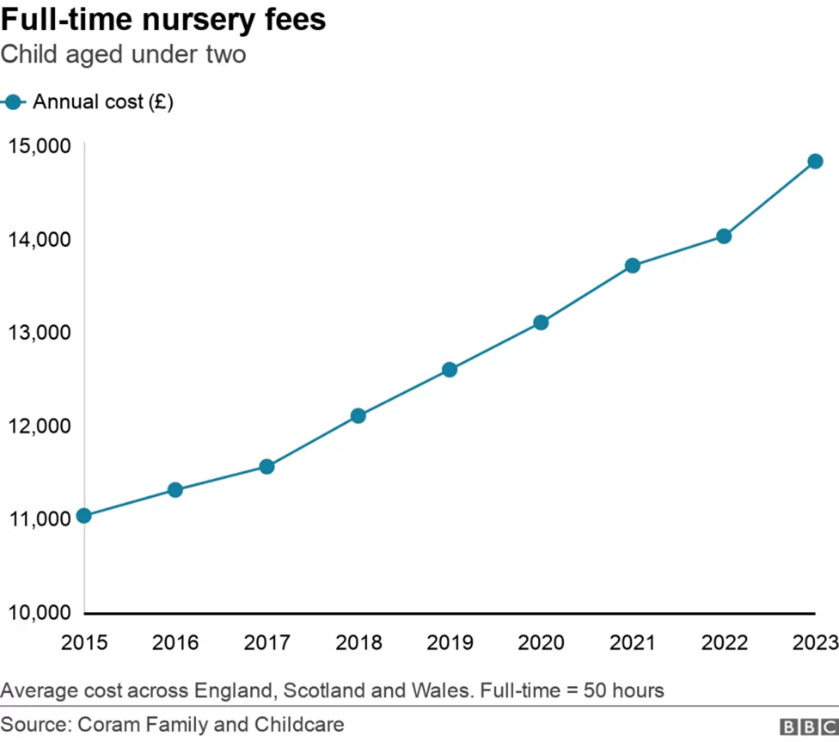
    As we well know, childcare costs were already a huge pressure on families before the cost-of-living crisis, with the UK ranking as one of the most expensive places for childcare in the world. Childcare costs have rocketed since 2013 (see graph below) and the average annual cost of a full-time nursery place for a child under two in Great Britain is now a staggering £14,836.

    Currently, working parents with three and four-year-olds are eligible for 30 hours of free childcare per week. It was yesterday announced that this will be extended to cover children below the age of three. There is no doubt this is a positive move for eligible families to have a bit more money in their pockets at the end of the month.

    It will eventually cover all children from the age of nine months according to the chancellor. The bad news is this policy will be staged and not implemented immediately.  The support will be staged, coming in for two-year-olds in April 2024, and September 2024 for those aged over nine months. Families are struggling now, and it would have helped to have been implemented immediately.

    The other good news is the government has agreed to pay childcare costs up front on Universal Credit. Previously it was paid in arrears so people responsible for children had to pay upfront and often struggled with this.

    The maximum amount people on universal credit can claim for childcare is also going up to £951 for one child, having been frozen at £646-a-month per child for several years. It will be £1,630 for two or more children. This is long overdue and will make a difference. It’s important to note this support will not be available on the old legacy benefits system and working tax credits.

    The Bad: Energy Prices and Bills

    The government have announced that support with energy bills will continue for another three months so a lot of people may ask why have I listed this as bad?

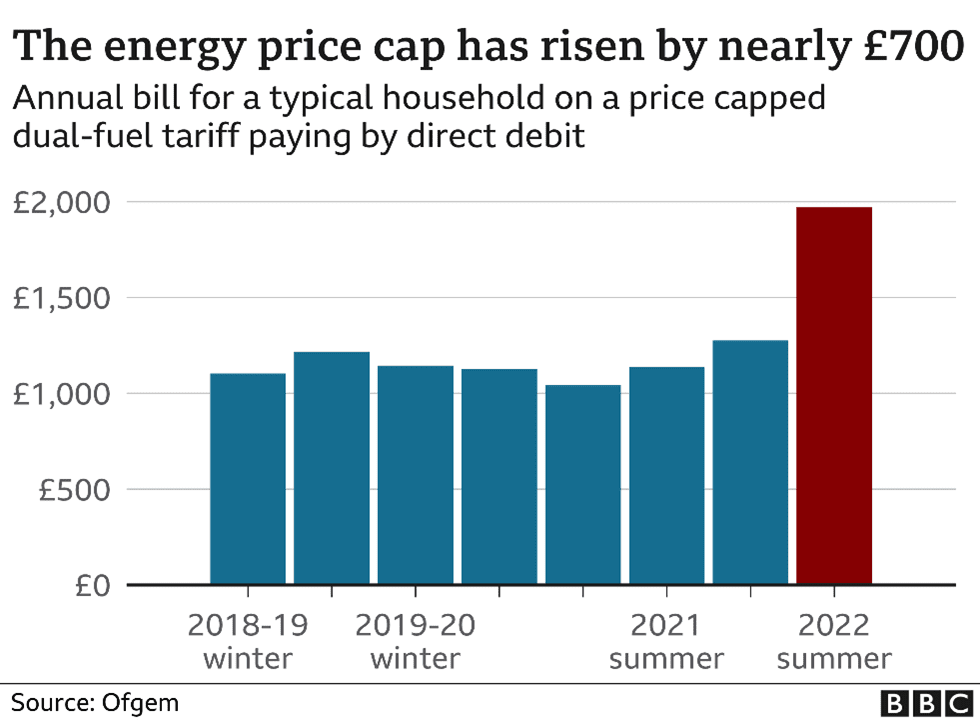
    Under the Energy Price Guarantee, the government has been limiting energy bills for a typical household to £2,500 a year, plus a £400 winter discount. However, it’s important to note this isn’t a cap, if you use more energy than the ‘typical household’ you will pay more.

    The bad news is typically, household bills are still double the level they were during the winter of 2021-22 and we have had several cold snaps recently with more to follow.

    Charities such as Citizens Advice are swamped with people unable to pay their energy bills or top up their prepayment meters and have been for months. In 2022 Citizens Advice saw more people who can’t top up their prepayment meter than in the whole of the last 10 years combined .

    As Energy Companies continue to make huge profits, we still have extremely high levels of fuel poverty, National Energy Action have predicted that 7.5 million people will still be in fuel poverty by April this year. I feel more is needed to be done on this front. A cheaper social tariff for vulnerable people on low incomes would be a better option with cost-of-living payments extended to families that need them.

    One long overdue announcement is four million prepayment meter customers will no longer pay more per unit of gas and electricity than those who pay via direct debit. However, this is not the end of differential pricing as things stand.

    If you pay quarterly, by cash or cheque then you are still likely to pay more than others for your domestic energy. So quite often this will be older or vulnerable people.

    Previously, the cost was higher and many people who use pre-payment meters are classed as vulnerable or already in debt with their supplier. There is still the risk of people self- disconnecting as they are choosing between heating and eating. The forced instalment of prepayment meters is still currently paused while Ofgem works out what to do next.

    The Ugly: Benefits Sanctions and changes to the Work Capability Assessment

    The chancellor called this budget the ‘working budget’ and quoted “Those who can work should work. Sanctions will be applied more rigorously for those who refuse to take up a reasonable job offer.” But as we all know many benefit sanctions are triggered when they often shouldn’t be. Sanctions can have a devastating affect where a claimant can lose up to £11 per day for up to 182 days.

    We have seen record numbers of sanctions recently, In the year to October 2022, DWP data shows that 523,967 UC sanctions were imposed. There were 117,865 in November 2022 alone which will have led to many claimants struggling financially over the Christmas period.

    Benefit Sanctions have been shown to have little positive impact on employability while impoverishing claimants and increasing mental ill-health, debt and poverty.

    The government have also announced that they are looking to scrap the often-criticised Work Capability Assessments for Universal Credit, which assesses claimants’ capacity for work, and instead using the personal independence payment (PIP) test, which measures the extra living costs of disability.

    But how will this work? PIP and Universal Credit are two very different benefits, assessing different things. Also, as we know there are already huge backlogs and waiting times for both PIP assessments and decisions, so will these people be expected to look for work, struggle and inevitably be sanctioned? We will keep you updated on these changes when the government releases further information.

  • Autumn Budget Changes to Universal Credit Explained in 5 minutes

    Autumn Budget Changes to Universal Credit Explained in 5 minutes

    Social Welfare Instructor Adam Matthews talks to Lee Booth about the changes to Universal Credit which is a shift in the right direction for working claimants, but unfortunately falls short for people who are looking for work.

  • Will the pandemic help us to get a grip of Universal Credit?

    Will the pandemic help us to get a grip of Universal Credit?

    Will the pandemic help us to get a grip of Universal Credit?

    Nearly a million people awarded UC over just 2 short weeks

    It’s hard to believe that nearly a million successfully applied for Universal Credit in the two weeks between 16th and 31st March alone. Coronavirus has triggered a rise of more than 500%, from 60,000 to 371,000 claims a week. The surge in applications dwarfs the impact on the benefit system during the last recession triggered by the 2008 financial crisis. It’s hard to avoid using that over-used word we’re hearing at the moment ‘unprecedented’;  we really have never seen anything like this before!

    As a result of this hike in numbers, DWP had no option other than to make the Universal Credit application process easier, with appointments over the phone and a less stringent application process where people are (understandably) not having to attend work-focused interviews with a nominated work coach at the job centre. This change has – temporarily at least – made it less complicated to apply for UC for applicants facing barriers to access (you have to ask yourself why it couldn’t have been made a bit simpler before now) …

    The UC claim system has been simplified but still far from simple

     But last week’s statistics published by the Citizens Advice network tell us that the network of charities delivering the Citizens Advice service helped 90,000 people with their UC claims since lockdown started on the 23rd of March. So the process may have been simplified but it’s still definitely not simple. Ok maybe it should never be really easy – the right checks and balances must be put in place when it comes to accessing benefits, but at the moment the system is still really problematic.  So let’s cast our minds forward. What happens when we revert back to the pre-pandemic claim process with more people now losing their jobs through sectors like the hospitality  industry not being able to carry staff financially through the crisis?

    We’re in trouble.

    Food banks in the Trussell Trust’s network are reporting their busiest time ever, with an 89% increase in emergency food parcels given to people across the UK in April 2020 compared to the same period in 2019.

    As the impact of coronavirus continues to unfold, a lot of people facing financial difficulties will be waiting for their first payment of Universal Credit for 5 weeks, and will already have taken the ‘advance payment’ which will cover bills and essentials temporarily. But it’s also recognised that, before the pandemic struck, in every area Universal Credit has been rolled out, food bank usage figures have shown a rise up to to 48%.

    UC claimants too often end up in debt

    We also need to be aware of the worrying issue of debt for Universal Credit claimants. A recent survey showed that 70% of people fell into debt during the 5 weeks wait for their first payment. Step Change said that since the beginning of lockdown in late March, as many as 1.2 million people had fallen behind on utility bill payments, 820,000 people on council tax, and 590,000 on rent. They also estimated that 4.2 million people had borrowed to make ends meet, mostly by using a credit card, overdraft or a high-cost product such as a payday loan.

    People clearly need more financial support whilst they are waiting for their first payment. This is an issue that is going to continue to get worse as more people are losing their jobs and having to claim Universal Credit.

    Radical change needed in housing and homelessness for UC claimants 

    If we look at the Housing situation in context of the Coronavirus, we have seen some positive measures brought in by the Government. The Eviction ban has just been extended for a further two months and there was a huge drive (the biggest since the second world war) to get the homeless of the streets during the peak of the pandemic.

    Many ‘street’ homeless are now on Universal Credit for the first time and are being supported by DWP staff and given the Job Centre as a ‘care of address’ so they can overcome the barrier of not being able to claim the benefit because they aren’t able to provide a permanent address. Again, this is very positive, but this needs to be upheld as restrictions are lifted.

    Surely it is morally wrong to protect people and give them accommodation because of the pandemic, but then turf them back onto the streets once it is over?

    Let’s hope that doesn’t happen. Local housing authorities face a huge task, and will undoubtedly need support from the Government, charities and the community and voluntary sector to get this right – we need to work together and be absolutely determined to make sure people don’t fall through the cracks at all costs.

    This is going to be a challenge. Housing is already a big issue when it comes to Universal Credit.  The Trussell Trust found that housing was the primary problem for 56% of claimants, citing the 5 weeks wait as the reason because people were pushed into rent arrears with either a private or social landlord, making it difficult then to recover. People on Universal Credit have also said they have found themselves being discriminated against by landlords who have lost confidence in the benefit due to late payment of rent or arrears due to complications with Universal Credit. If you’ve looked at local houses for rent adverts recently you’ll see they’re still proclaiming no DSS! This is a vicious circle.

    If we’re to get a grip of Universal Credit there’s a lot to do

    Coronavirus and lockdown has really made a bad situation significantly worse. More people are now claiming Universal Credit, and have just had to adapt. 

    However, now we have an opportunity to get it right and this is our call to the Government and DWP. There’s a lot to say, but if we were only able to make one challenge, it would be:

    Please accept that the 5 week wait is simply too long.

    Society Matters cic is doing its bit to make its mark, and thousands of charities working hard on the front line are saying the same thing. Let’s stop people losing their homes, getting into debt, reaching crisis point, for the sake of a system that can be changed. Social welfare matters. Society matters. Let’s call to Government to invest what has been learned through the pandemic to get a grip of Universal Credit once and for all.

    This window of opportunity may never arise again.

    Adam Matthews, Social Welfare Instructor at Society Matters cic