Tag: PIP

  • The Welfare Benefit System

    The Welfare Benefit System

    We’ve refreshed, updated and renamed our “Get to Grips with Understanding Welfare Benefits” course as “The Welfare Benefit System“—a name that better reflects its comprehensive approach to navigating the entire welfare benefits system. The new course has this month been CPD accredited to assure our usual high quality learning experience.

    The Course now explains the migration to universal credit and how the legacy benefits have been incorporated into the 6 elements of Universal Credit.

    Explore the complexities of the UK welfare benefits system, which remains intricate even after the introduction of Universal Credit and PIP in 2013—reforms intended to streamline the system.

    Our concise training course provides a clear and practical introduction to all the welfare benefits still actively claimed—and often overlooked—by millions in the UK.

    Designed and delivered for professionals supporting individuals in social welfare, “The Welfare Benefit System” equips you and your organisation with essential knowledge to confidently navigate this evolving landscape.

    We tailor our delivery to your organisations needs, helping you to put all of the pieces of the jigsaw of the welfare benefits system together.

  • Getting to Grips with PIP reviews and the current backlog of cases 

    Getting to Grips with PIP reviews and the current backlog of cases 

    In this article, Training Manager Adam Matthews gives us the lowdown on PIP Reviews, shares some useful tips, and explores the devastating effects on the current backlog and waiting times for decisions being made for people on PIP.

    What is a PIP Review?

    The Department for Work and Pensions (DWP) can review a person’s Personal Independence Payment (PIP) award at any time. This has proved controversial as the DWP often initiate a review even if the person has an award for a fixed period. Understandably this can cause severe anxiety and alarm for a person with a disability or long-term health condition.

    It is also important that a person tells the Department for Work and Pensions (DWP) if and when anything changes which might affect an entitlement to PIP. If a person’s health is getting worse or better, the DWP may want to reassess them, and this would normally initiate a PIP Review.

    What are the 5 Stages of a PIP Review

    1) When the DWP decide to initiate a PIP Review they will notify the person by a letter which asks them to complete the “Award review – how your disability affects you” form.

    2) The person will be expected to fill in the form

    3) The form must be sent back to the DWP (to watertight the case with supporting evidence). The person must return the form by the time given on the initial PIP review letter – if the person doesn’t their PIP could be stopped. If the person needs an extension to the deadline, they will need to contact the DWP with an acceptable reason for the delay. Examples of an acceptable reason could be that they have been ill or caring for a loved one.

    4) Once the form is received the DWP will review the form. If they need more information, an independent health professional might phone the person to ask some questions or send a letter inviting them to an assessment. Assessments can be in person but currently are mostly over the phone or in some cases by video call.

    5) Finally, the person should receive a letter from the DWP informing them of their decision. There is no guarantee on how long this will take. The DWP could decide to do the following:

    • Extend the PIP award.
    • Increase or decrease payments.
    • End the persons PIP claim.

    If the person would like to challenge a decision, they will usually need to follow the mandatory reconsideration process and appeal if this is unsuccessful.

    Where do we Currently Stand with PIP Reviews?

    Statistics this month from Citizens Advice revealed that a staggering 430,000 people are currently awaiting the outcome of a Personal Independence Payment review across the UK. As a result of this often-vulnerable people with disabilities and long-term health conditions are missing out on an estimated £24m a month.

    Some PIP reviews since the pandemic have taken up to two and a half years to be processed and understandably this can cause severe distress, with a person awaiting the often-dreaded decision letter to turn up everyday and what the outcome may be.

    In the last six months, the number of people seeking support from Citizens Advice for Pip review-related issues rose by a significant 19% compared with the same period last year. The charity says delays to payments worth up to £172 a week are causing widespread hardship and distress during a cost-of-living crisis.

    The Impact of the Backlog of PIP Reviews

    Recent Scope research suggests that currently on average, disabled households (with at least one disabled adult or child) need an additional £975 a month to have the same standard of living as non-disabled households.

    Whilst someone waiting for their PIP review should still receive financial support, it is only their initial award amount, meaning that if their health condition has got worse (as often happens) or their needs have increased since they were last assessed, the payments will not cover their growing costs.

    PIP Review delays can disrupt crucial access to other important benefits such as carers benefits for a person supporting the person, blue badges and access to the Motability scheme affecting the persons independence and vital financial support for younger claimants and their parents in full time education worth up to £456.89 per month on Universal Credit for example.

    The psychological impact of both receiving a PIP review notification letter (especially when you may have another couple of years until the end of your current PIP award) or being in limbo after you have completed the PIP review form awaiting the decision can be devastating on a person. As an adviser I often sympathised with people who told me that the uncertainty had made their condition worse.

    2 Tips for Completing the PIP Review process

    Use the Descriptors Again and Justify the Points

    It’s risky just to state that there has been no change to the condition or just give brief statements on the PIP review form. Also, there isn’t much space given on the form so I would recommend giving as much detail as possible and adding extra pages of A4 paper.

    Remember DWP decision makers often aren’t medical experts. They will be looking at how often the condition affects the person in relation to the PIP descriptors as they did in the initial application, so it’s really important to justify the points giving recent examples and histories of the persons challenges. Remember to use PIP terminology such as differentiating between if a person requires ‘supervision’ or ‘prompting’.

    If we think the person should be scoring 8 points for the Preparing Food Descriptor for example, we need to demonstrate that person ‘cannot prepare and cook food’. So, we need to explain why this is the case in relation to their conditions, if there is a risk factor, who prepares the food for them and what would happen if they weren’t available to support the person.

    The Importance of Supporting Medical Evidence

    It’s important to supply supporting evidence, (especially if the condition has got worse as the person may be entitled to a higher rate}.

    You should include copies of documents such as:

    • a list of the persons prescriptions
    • a copy of a care plan if one is in place or a carers statement for a carer can be useful.
    • any paperwork a person has been given by health professionals, including reports and letters (not appointment letters)
    • PIP diary is always useful and gives a DWP decision maker a good insight into how often a condition affects a person.

    Remember the DWP must consider all relevant supporting evidence! So, if this is not addressed by the DWP when making their decision, this would often be your starting point when challenging a decision!

  • Spring Budget: The Good, the Bad and the Ugly in 3 graphs

    Spring Budget: The Good, the Bad and the Ugly in 3 graphs

    Spring Budget: The Good, the Bad and the Ugly in 3 graphs

    Society Matters Social Welfare Instructor Adam Matthews gives us a quick overview on Wednesday’s Spring budget.

    The Good: Childcare

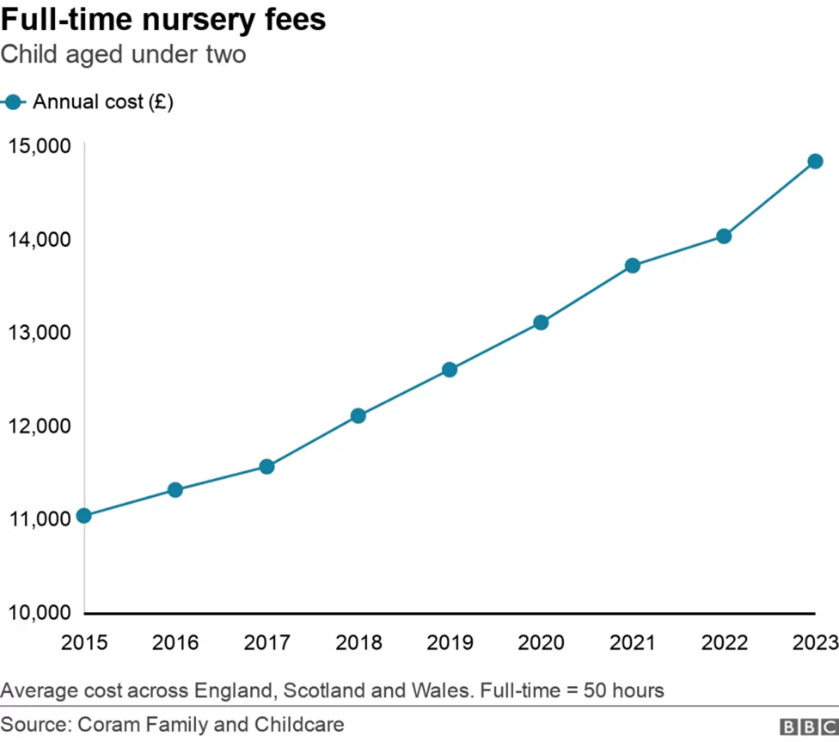
    As we well know, childcare costs were already a huge pressure on families before the cost-of-living crisis, with the UK ranking as one of the most expensive places for childcare in the world. Childcare costs have rocketed since 2013 (see graph below) and the average annual cost of a full-time nursery place for a child under two in Great Britain is now a staggering £14,836.

    Currently, working parents with three and four-year-olds are eligible for 30 hours of free childcare per week. It was yesterday announced that this will be extended to cover children below the age of three. There is no doubt this is a positive move for eligible families to have a bit more money in their pockets at the end of the month.

    It will eventually cover all children from the age of nine months according to the chancellor. The bad news is this policy will be staged and not implemented immediately.  The support will be staged, coming in for two-year-olds in April 2024, and September 2024 for those aged over nine months. Families are struggling now, and it would have helped to have been implemented immediately.

    The other good news is the government has agreed to pay childcare costs up front on Universal Credit. Previously it was paid in arrears so people responsible for children had to pay upfront and often struggled with this.

    The maximum amount people on universal credit can claim for childcare is also going up to £951 for one child, having been frozen at £646-a-month per child for several years. It will be £1,630 for two or more children. This is long overdue and will make a difference. It’s important to note this support will not be available on the old legacy benefits system and working tax credits.

    The Bad: Energy Prices and Bills

    The government have announced that support with energy bills will continue for another three months so a lot of people may ask why have I listed this as bad?

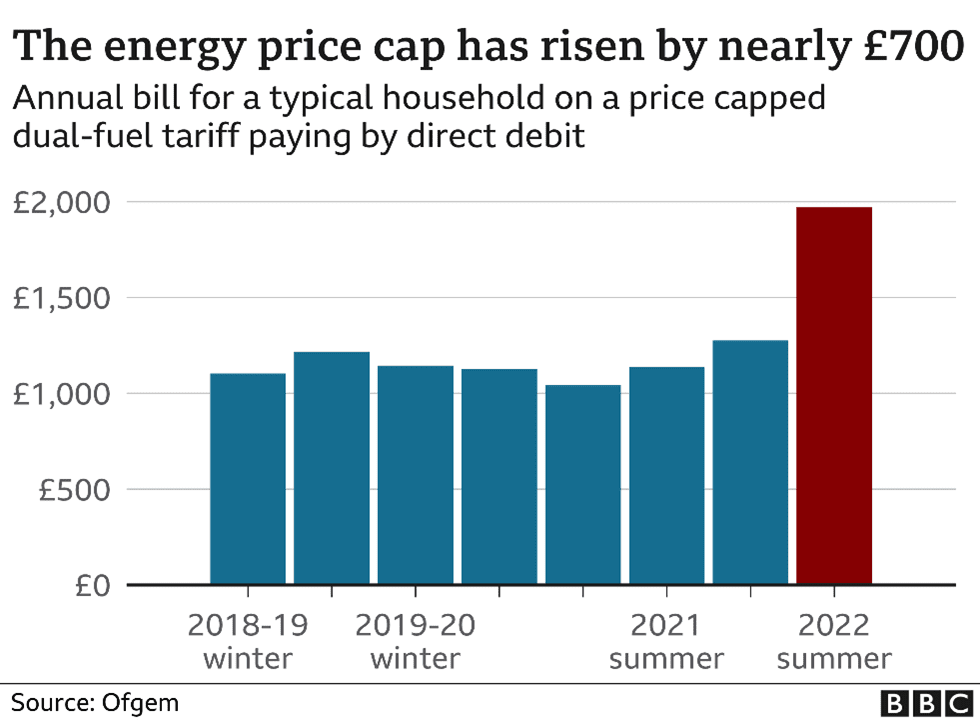
    Under the Energy Price Guarantee, the government has been limiting energy bills for a typical household to £2,500 a year, plus a £400 winter discount. However, it’s important to note this isn’t a cap, if you use more energy than the ‘typical household’ you will pay more.

    The bad news is typically, household bills are still double the level they were during the winter of 2021-22 and we have had several cold snaps recently with more to follow.

    Charities such as Citizens Advice are swamped with people unable to pay their energy bills or top up their prepayment meters and have been for months. In 2022 Citizens Advice saw more people who can’t top up their prepayment meter than in the whole of the last 10 years combined .

    As Energy Companies continue to make huge profits, we still have extremely high levels of fuel poverty, National Energy Action have predicted that 7.5 million people will still be in fuel poverty by April this year. I feel more is needed to be done on this front. A cheaper social tariff for vulnerable people on low incomes would be a better option with cost-of-living payments extended to families that need them.

    One long overdue announcement is four million prepayment meter customers will no longer pay more per unit of gas and electricity than those who pay via direct debit. However, this is not the end of differential pricing as things stand.

    If you pay quarterly, by cash or cheque then you are still likely to pay more than others for your domestic energy. So quite often this will be older or vulnerable people.

    Previously, the cost was higher and many people who use pre-payment meters are classed as vulnerable or already in debt with their supplier. There is still the risk of people self- disconnecting as they are choosing between heating and eating. The forced instalment of prepayment meters is still currently paused while Ofgem works out what to do next.

    The Ugly: Benefits Sanctions and changes to the Work Capability Assessment

    The chancellor called this budget the ‘working budget’ and quoted “Those who can work should work. Sanctions will be applied more rigorously for those who refuse to take up a reasonable job offer.” But as we all know many benefit sanctions are triggered when they often shouldn’t be. Sanctions can have a devastating affect where a claimant can lose up to £11 per day for up to 182 days.

    We have seen record numbers of sanctions recently, In the year to October 2022, DWP data shows that 523,967 UC sanctions were imposed. There were 117,865 in November 2022 alone which will have led to many claimants struggling financially over the Christmas period.

    Benefit Sanctions have been shown to have little positive impact on employability while impoverishing claimants and increasing mental ill-health, debt and poverty.

    The government have also announced that they are looking to scrap the often-criticised Work Capability Assessments for Universal Credit, which assesses claimants’ capacity for work, and instead using the personal independence payment (PIP) test, which measures the extra living costs of disability.

    But how will this work? PIP and Universal Credit are two very different benefits, assessing different things. Also, as we know there are already huge backlogs and waiting times for both PIP assessments and decisions, so will these people be expected to look for work, struggle and inevitably be sanctioned? We will keep you updated on these changes when the government releases further information.